

Ownership / Safety
Seasonal home maintenance: a calendar that fits your home
Use routine checks to catch small changes early. Organise work around your climate, equipment instructions and household responsibilities rather than a one-size-fits-all month.
Our articles are a starting point, not a professional assessment of your home.
DraftA work in progress, prepared by the HouseIQ.pro team.Editorial and professional review are not yet complete.
The Big Picture
A useful checklist turns observations into action: what changed, who will handle it and when it will be checked again.
Build a short plan you can actually repeat
Start with a walk through the home and a list of its systems. Record model numbers, manuals, accessible shutoffs, service contacts and who is responsible for each task. A renter may be responsible for reporting a leak promptly while the owner arranges the repair; do not assume the same division applies to every lease or jurisdiction.
Make three columns: observe, act and confirm. 'Check the basement' is vague. 'Look for new moisture after heavy rain; report a wet corner; confirm the cause was corrected' leads somewhere. Put urgent defects ahead of cosmetic work. Add manufacturer-required intervals to a calendar, then group outdoor tasks before the local weather makes access or repair difficult. The calendar should remind you to think, not encourage unsafe work to meet a date.
Give life-safety checks a reliable rhythm
US Fire Administration guidance calls for monthly smoke-alarm testing and following the manufacturer's care instructions. Record each alarm's manufacture or replacement information. Sealed-battery, replaceable-battery and hardwired units do not all have the same maintenance procedure. Replace equipment at its specified end of life, and ask the local fire authority about the required type, placement and accessibility features.
Check carbon-monoxide alarms according to their own instructions and local requirements; do not assume their replacement interval matches a smoke alarm. Never disable an alarm to solve nuisance operation. Review escape routes and make sure stored items have not blocked them. A sounding alarm or suspected gas problem is an emergency response situation, not something to add to next weekend's maintenance list.
Look for water in ordinary places
During routine cleaning, look under sinks, around toilets and near appliances for dampness, staining, swelling or a change in smell. Follow up recurring condensation rather than painting over the evidence. EPA's moisture guidance makes the central point clear: correcting the water source matters as much as cleaning the visible result.
After rain, observe gutters and downspouts from a safe place and note where runoff collects. Check whether drainage routes remain open and whether landscaping has changed their direction. Keep dated photographs of repeat trouble spots. Do not enter a flooded space with possible electrical hazards, disturb sewage contamination or open concealed materials to investigate suspected mould without appropriate advice. The aim of the walk-around is early detection, not doing every repair yourself.
Before freezing weather, prepare the systems that contain water
Where freezing occurs, disconnect and drain outdoor hoses and arrange the appropriate winterisation for hose connections, irrigation and other exposed plumbing. Follow the equipment or installer's procedure: an outdoor fixture described as frost-resistant still has installation and use conditions. Identify vulnerable supply pipes in unheated spaces before the coldest night arrives.
The Red Cross highlights exposed outdoor lines, unheated areas and poorly insulated exterior-wall locations as common vulnerabilities. Ask a plumber about a recurring freeze problem rather than relying indefinitely on an emergency trick. Know the water shutoff location and make sure someone can reach it safely. Never use an open flame to thaw a pipe. If away during cold weather, arrange a suitable heat, inspection and emergency plan and check the insurer's absence conditions.
Service equipment before its hardest season
Schedule heating and cooling service before peak demand where possible. ENERGY STAR separates a professional checkup from everyday household tasks: electrical measurements, combustion checks, refrigerant work and internal adjustments belong with qualified technicians. Ask for a record of findings, not just a sticker saying the visit occurred.
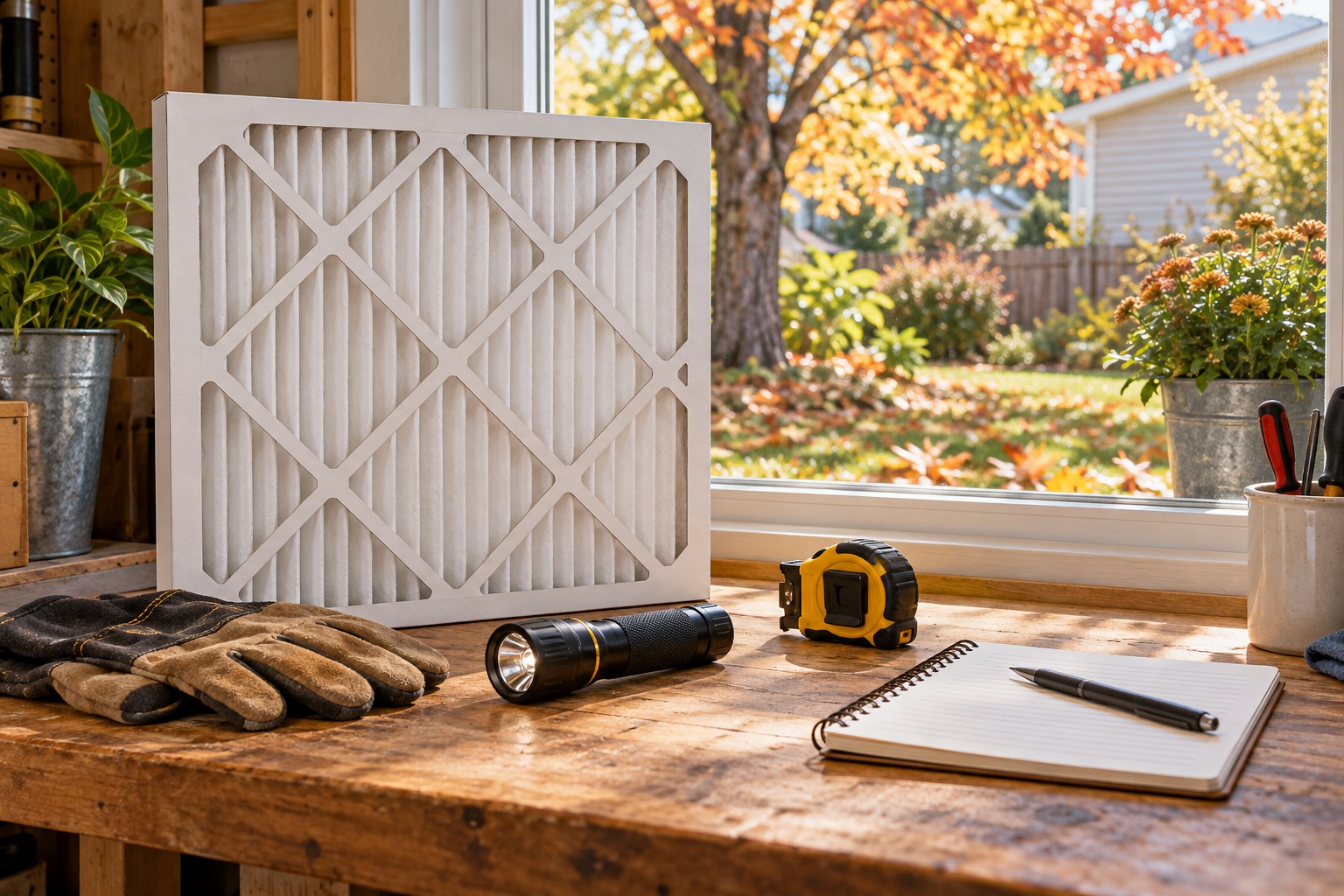
For accessible filters, follow the equipment manual for the correct size, type, direction and checking interval. Dust, pets and operating time affect how quickly a filter loads. A more restrictive filter is not automatically a better choice for the system. Keep supply and return openings unobstructed and note unfamiliar noises, weak airflow or repeated shutdowns. Clean accessible ventilation components only as their instructions allow, and avoid opening electrical or fuel-system compartments.
Before wet or hot weather, check drainage and moisture control
In climates with a rainy or storm season, arrange gutter and roof-drain cleaning before it begins. Inspect the roof from the ground or with professional help, especially after severe weather. Test sump equipment and backup arrangements using the manufacturer's procedure if the home has them; do not assume a quiet pump is ready simply because it has not been needed recently.
In humid weather, watch indoor moisture and cooling-system condensate drainage. A cool room can still have a moisture problem. Report overflowing drain pans, persistent dampness and musty smells promptly. Ask the servicing contractor what you can safely inspect between visits. Keep exterior equipment clear as specified by its manufacturer without trimming near hazardous wiring or dismantling guards. Storm preparation should be completed before dangerous conditions arrive.
Walk the exterior after conditions change
After winter, a wet season or a major storm, look from safe ground for displaced roof materials, detached gutters, damaged cladding, loose railings and new ponding. Photograph changes rather than relying on memory. A route around the home taken from the same viewpoints makes comparison easier. Do not climb a roof, lean over a balcony or test a suspect railing by loading it.
Separate maintenance from diagnosis. Clearing accessible debris may be routine; recurring water entry, visible movement, a soft deck surface or a growing crack needs someone qualified to assess the cause. Renters should report the location, timing and photographs through the agreed channel. Owners should assign an action and follow-up date. A checklist is incomplete if every problem is noticed but none is closed out.
Use one annual review to connect the records
Once a year, review the household inventory, insurance, emergency contacts and unresolved repairs. Confirm that equipment service dates and warranties are stored where they can be found. For septic homes, keep inspection and pumping records and use professional observations to plan service; EPA explains that occupancy, tank size and solids loading affect pumping needs. Do not substitute a generic calendar for the system's actual condition.
Choose the next few priority jobs and a realistic budget, leaving room for unexpected work. Record completed work with dates, photographs and the contractor's report. That history helps the next technician understand what changed and helps the household avoid paying twice for an unresolved symptom. A well-kept home is not a home without any defects; it is a home whose owners and occupants notice, communicate and act on them.
Questions worth asking
- Which tasks are mine and which belong to the owner or a professional?
- What needs attention before the next local weather season?
- What changed since the last inspection, and who will confirm the repair?
Sources
- US Fire Administration Smoke Alarms
- ENERGY STAR Maintenance Checklist
- American Red Cross Preventing and Thawing Frozen Pipes
- US Environmental Protection Agency A Brief Guide to Mold, Moisture and Your Home
- US Environmental Protection Agency How to Care for Your Septic System
- National Association of Insurance Commissioners Home Inventory