

Outdoors / Drainage
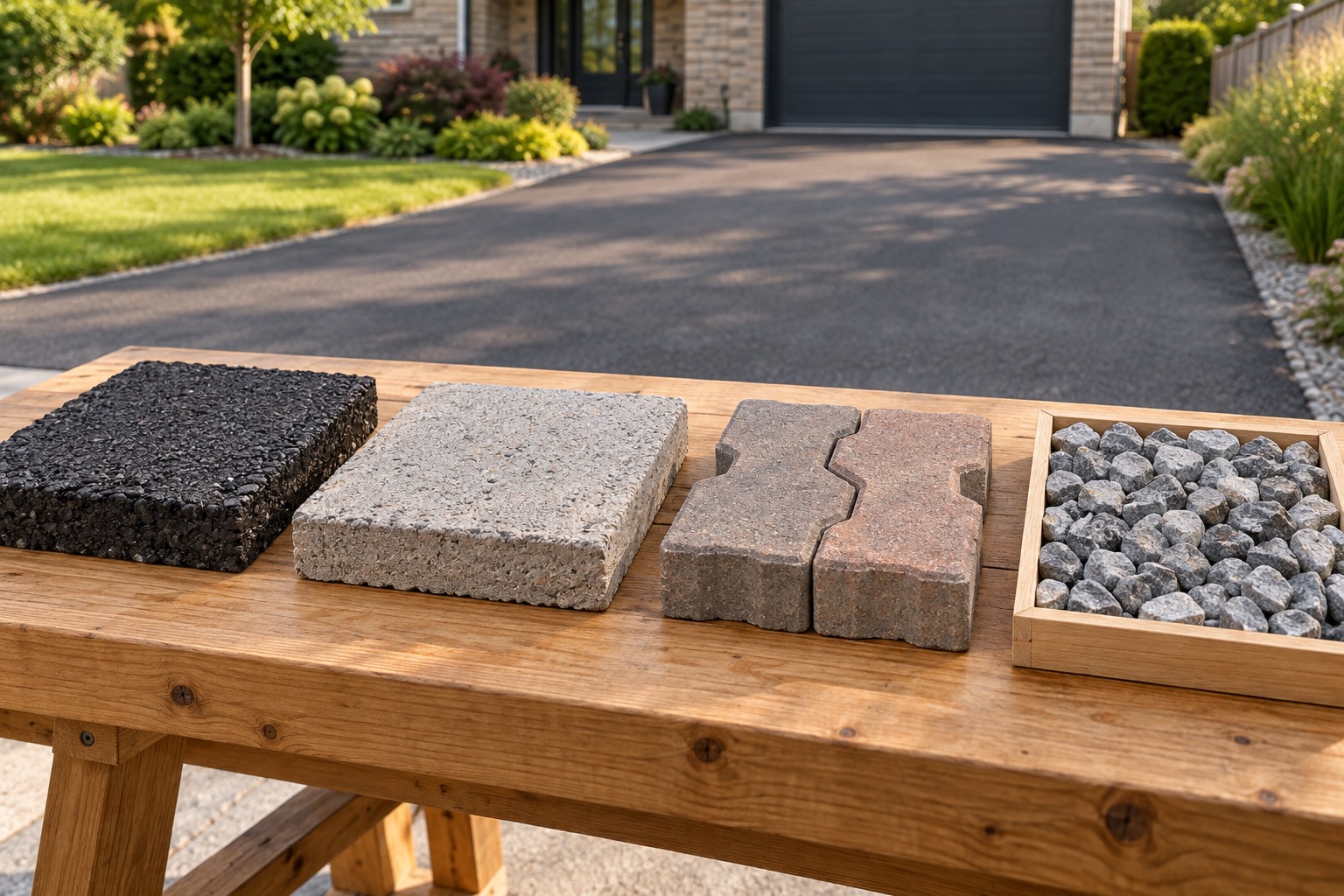
Driveways: asphalt, concrete, pavers or gravel?
The surface catches your eye. The soil, base and drainage usually decide whether it stays level. Compare materials as complete systems, including future repairs.
Our articles are a starting point, not a professional assessment of your home.
DraftA work in progress, prepared by the HouseIQ.pro team.Editorial and professional review are not yet complete.
The Big Picture
Choose a driveway from the ground up: drainage and support first, surface and maintenance second.
The invisible layers do much of the work
A driveway is like a mattress on a bed frame: a good-looking top cannot compensate for support that moves beneath it. The surface spreads vehicle loads into a prepared base and the underlying soil. Soft pockets, poorly compacted fill or trapped water can produce settlement and cracking in several different surface materials.
Before choosing a colour, show the contractor where water sits after rain, where snowmelt crosses the drive and whether a moving truck or recreational vehicle will use it. Ask how weak ground will be identified, what happens if it is found and who pays for extra excavation. A quotation that describes only the visible surface leaves the most consequential work unclear.
Asphalt offers a continuous, repairable surface
Asphalt combines aggregate with a bituminous binder. It provides a relatively smooth running surface and can be patched, although repairs may remain visible. The surface is flexible in engineering terms; that does not mean it can accommodate unlimited settlement without damage. Compaction, appropriate mix and construction conditions matter.
Separate preservation from repair. A surface coating cannot rebuild a weak base or make a deep depression drain correctly. A contractor proposing an overlay should explain which failed areas need removal first and how the new height will meet garage floors, walks and drains. Ask for the recommended opening-to-traffic time and care during hot weather rather than treating every fresh asphalt installation alike.
Concrete needs planned joints and careful curing
Concrete forms a rigid slab. Shrinkage and temperature changes still occur, so joints and construction detailing help manage where movement appears. A crisp new surface is not evidence that curing, base preparation or drainage were handled well. These decisions are difficult to correct after the pour.
Cracking has different causes. A narrow crack without displacement is a different observation from a rocking slab, a trip edge or continuing settlement. Surface scaling is different again: pieces flake away from the exposed face. In freezing conditions, saturated concrete and deicing exposure can contribute to scaling; appropriate concrete, finishing and curing are important. Have a contractor diagnose the mechanism before choosing a coating or patch that merely hides the symptom.
Pavers make local repair possible
Individual paving units can be lifted for a local repair or utility access and reinstated, which is an attractive maintenance advantage. It still takes care to restore the bedding, joints, edge restraint and level. A displaced edge or low wheel track is a reason to examine support and drainage, not simply add more joint material at the surface.
Ordinary interlocking pavers and a designed permeable pavement are not interchangeable. A permeable system deliberately passes water through joints or the surface into specified underlying layers. Putting attractive blocks on an ordinary dense base does not establish stormwater performance. Ask which system is being quoted, where water will go when storage fills and what inspection and cleaning it needs to keep functioning.
Gravel trades a fixed surface for ongoing reshaping
A gravel driveway is not just a layer of loose decorative stones. The aggregate selection, grading, compaction and drainage need to suit vehicle use and the site. Expect loose material to move, especially where tyres turn, water flows or a snowplow operates. Discuss how often reshaping or replenishment may be needed under your own traffic conditions.
Think about people as well as cars. A surface that works for a pickup may be awkward for a wheelchair, walker, stroller or someone carrying groceries. Before selecting gravel, try the proposed material in comparable installed conditions. Ask the contractor to show how the entry transition, turning area and walking route will remain usable, and confirm any local rules limiting loose material near a public road.
Follow the water beyond the edge
Changing a driveway can change runoff. Observe the whole route from roof and higher ground to driveway, foundation, street and neighbouring property. Do not solve a garage puddle by redirecting water into someone else's yard. Local authorities may control driveway widening, curb work, discharge and the amount of impermeable surface.
Permeable paving can help manage runoff, but suitability depends on soil infiltration, groundwater, slopes, winter practice and a designed overflow route. It is not a universal answer beside a vulnerable foundation. EPA's overview explains the basic approach; a site designer must decide whether infiltration, an underdrain or another arrangement is appropriate. Ask how clogging will be detected and who will maintain the system after installation.
Plan snow removal before choosing a finish
Review the surface with the person who will actually clear it. Uneven joints and raised edges can catch equipment; loose gravel can be displaced. A textured or decorative finish may need particular care. Ask the material supplier which tools and deicers are compatible, especially during the first winter of a new concrete installation. More salt is not a repair for water that repeatedly ponds and refreezes.
In warm regions, substitute intense rain, surface heat and seasonal soil movement for the snow discussion. Look for examples of the proposed system that have been in service locally for several seasons. A showroom sample tells you about appearance; an older driveway tells you more about weathering, staining and maintenance.
Compare the same scope and diagnose before resurfacing
Collect comparable written quotations that identify excavation, disposal, base preparation, drainage, surface construction, edge details, utility work and reinstatement of adjacent areas. Include access restrictions and the expected period without vehicle use. Prices and useful life vary too much with these conditions to make a universal cost-per-area or lifespan promise useful.
Keep dated photographs of cracks, depressions and standing water. A change in level, recurring pothole or spreading failure deserves professional assessment. Small maintenance jobs may be manageable with an appropriate product and safe access, but excavation, heavy equipment and major grading require qualified help and utility locating. Ask whether the proposed treatment corrects the cause, what it cannot correct, and what future maintenance remains your responsibility.
Questions worth asking
- What does this quote include below the surface?
- Where does stormwater go, including when the system is overwhelmed?
- Can you show a comparable local installation after several winters or wet seasons?
Sources
- Colorado Asphalt Pavement Association / Asphalt Institute Best Practices for the Use of Asphalt Driveways
- Asphalt Institute Repair of Asphalt Parking Lots and Driveways
- National Ready Mixed Concrete Association CIP 2: Scaling Concrete Surfaces
- National Ready Mixed Concrete Association CIP 4: Cracking Concrete Surfaces
- US Environmental Protection Agency Soak Up the Rain: Permeable Pavement