

Outdoor spaces
Fences: choose the material, then design the whole boundary
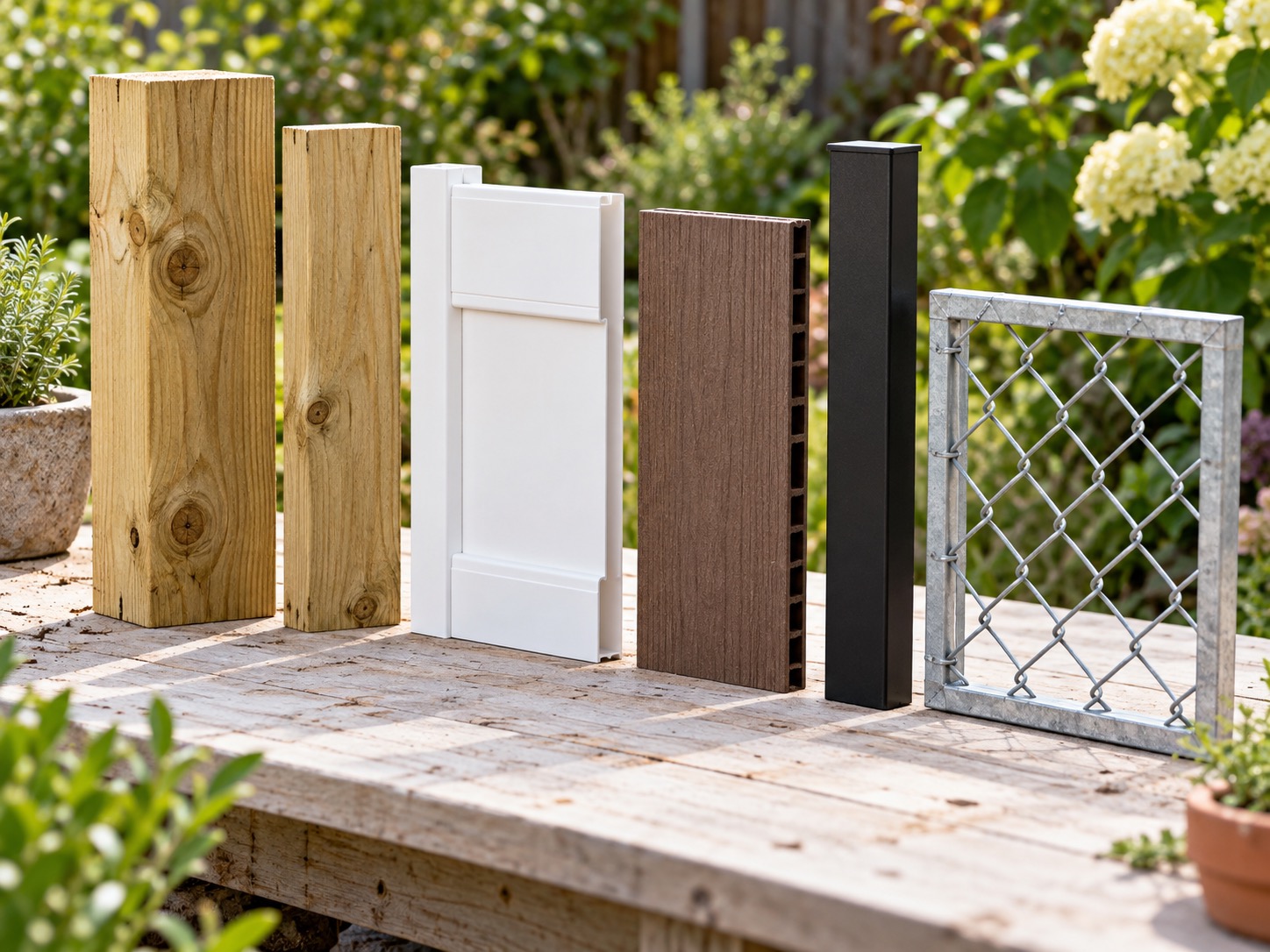
Compare wood, vinyl, composite, aluminum and chain link while giving posts, gates, wind and neighbours their due.
Our articles are a starting point, not a professional assessment of your home.
DraftA work in progress, prepared by the HouseIQ.pro team.Editorial and professional review are not yet complete.
The Big Picture
A fence works as a connected system of panels, posts, foundations and gates. Privacy, durability and safety depend on more than the boards between the posts.
Decide what the fence needs to accomplish
Privacy, marking a boundary, containing a pet and protecting a pool are different jobs. A solid panel can screen a seating area, while an open metal fence preserves views and sightlines. A fence that looks substantial may still have gaps a small pet can pass through or features a child can climb. Write down the purpose before choosing a style.
Walk the proposed line and note slopes, trees, drains, access needs and how gates will swing. Consider the view from both sides and discuss the proposal with neighbours early. A shared understanding does not replace a survey or local rules, but it can prevent an expensive argument over a fence that was beautifully built in the wrong place.
Pressure-treated wood: adaptable, with ongoing care
Wood makes it relatively straightforward to create custom heights, repair individual boards and match an existing yard. Pressure treatment helps resist specified decay or insect hazards, but not every treated product is intended for every exposure. A post in soil and a rail above ground may need different treatment suitability. Ask for the product identification rather than accepting colour as proof.
Wood still changes with moisture and weather. Plan for condition checks, compatible fasteners and any desired finish maintenance. Avoid surrounding the bottom of the fence with permanently wet mulch or storing debris against it. EPA's overview explains the purpose and variety of preservatives; it does not make all old treated timber interchangeable with newly specified residential material.
Vinyl and composite: less finishing, still a system
Vinyl profiles and composite boards can reduce routine painting or staining, but their designs differ. Some use reinforced rails or proprietary posts; others rely on a specified framework. Temperature movement, panel width and fastening details need to follow the chosen system. Mixing an attractive infill with unrelated supports can undermine the tested arrangement.
Ask how a damaged board or panel is replaced and whether matching colours are likely to remain available. Inspect a physical sample instead of judging texture only from a small web image. Manufacturer care guidance is useful for choosing cleaning methods, but promotional phrases such as 'maintenance-free' should not replace checking gates, attachments, storm damage and accumulated dirt.
Aluminum and chain link: open views and different trade-offs
Aluminum picket fencing is often selected where an open appearance is useful. Chain link uses a tensioned metal mesh and is practical where visibility and containment matter more than a solid screen. Neither automatically provides the privacy of close-board fencing. Adding slats or screening later changes the fence's wind exposure and should be reviewed with the supplier.
For metal systems, ask about coatings, compatible hardware and suitability for coastal salt or other corrosive exposure. Aluminum does not develop iron rust, but that does not mean every coating, connection or accessory is immune to deterioration. Gates deserve particular attention: a long or heavy gate places demands on its hinges and posts that an ordinary fixed panel does not.
Privacy panels also catch the wind
Think of a solid fence as a sail held by a line of posts. Increasing height or filling gaps changes what the supports must resist. A fence that performs adequately in a sheltered courtyard may need different design on an exposed corner or coastal lot. The post, connection and foundation system needs to suit the actual panel and exposure.
Ask for the manufacturer's limitations and the designer's assumptions. Do not simply add a tall screen to an existing fence because the old posts feel firm on a calm day. On slopes, decide whether panels step or follow the grade and how gaps are managed. An aesthetically pleasing arrangement must still address containment, drainage, maintenance and any applicable safety function.
The ground is part of the fence
A straight fence on installation day can lean later if its supports move. Soil strength, frost action, moisture, slope and the forces on the panels all influence foundation requirements. There is no single hole depth or bag count that works for every fence in every climate. Sandy ground is not automatically easy ground, and freezing soil is not the only source of movement.
Have the installer identify the proposed post system and how it suits the product and site. Ask how water will be managed around vulnerable components and how a failed post could be replaced. Before digging, arrange the required utility locates and clarify any private lines that need separate locating. Do not assume an old fence line is a safe excavation corridor.
A boundary fence is not automatically a safety barrier
Pool enclosures and guards beside a drop have specific safety purposes. Height alone does not establish suitability: openings, climbability, gates, latches, nearby objects and access from the house can matter. Verify the applicable local requirements before ordering a fence for either use, and arrange required approvals and inspections.
Toronto's fence guidance illustrates how rules can distinguish ordinary boundaries, driveway sightlines and pool enclosures. Those details are Toronto-specific, not universal dimensions to copy elsewhere. Requirements and responsibility for shared fences also differ by jurisdiction. Renters and condominium residents should obtain permission through the appropriate owner or association rather than assuming a small garden change is theirs to authorize.
Leave room for maintenance and local hazards
A fence can collect leaves and vegetation, obstruct access or carry fire toward a building if combustible material connects the two. In wildfire-prone areas, ask about the section nearest the house and how it fits the property's ignition-reduction plan. A decorative fence should not quietly defeat work done elsewhere to reduce exposure.
Walk the line periodically and after major weather. Look for leaning posts, loose attachments, sharp damage, dragging gates and blocked drainage. Use the product's cleaning instructions and check before applying strong chemicals or high-pressure washing. Keep a safety-critical gate functioning as intended; do not prop a pool gate open or postpone a latch repair because the rest of the fence looks sound.
Buy a repairable boundary
Compare quotations that include the same height, length, gates, post system, removal work and site preparation. Identify who confirms the legal boundary and obtains any required approvals. Ask about access for machinery and how landscaping or neighbouring property will be protected. An unusually low price may omit the difficult parts below ground or at the gates.
There is no reliable universal price or service life for a material category. Exposure, installation and component replacement affect the result. Ask what the warranty excludes, whether labour is covered, and what happens if a matching panel is discontinued. Keep the layout, product details and installer information with the home record so a later repair starts with facts rather than a guessing game.
Questions worth asking
- Is the fence for privacy, containment, a pool barrier or a guard—and does its design suit that job?
- What site conditions determine the posts and foundations?
- Who confirms the boundary, utilities, permits and future repair method?
Sources
- US Environmental Protection Agency Overview of Wood Preservative Chemicals
- City of Toronto Fences
- Catalyst Fence Solutions Compare Fencing Materials
- Catalyst Fence Solutions Fence Maintenance & Care
- Ontario Dig Authority Public Utility Locates
- PNNL Building America Solution Center Decks are Wildfire-Resistant