

Plumbing / Interiors
Garbage disposals: useful habits, safe limits and septic care
Grinding food makes smaller particles, not disappearing waste. Know your model, protect the drain and stop safely when something goes wrong.
Our articles are a starting point, not a professional assessment of your home.
DraftA work in progress, prepared by the HouseIQ.pro team.Editorial and professional review are not yet complete.
The Big Picture
A disposal is an appliance connected to a drain system. Both need to accept what you feed it.
Grinding is only the first part of the journey
A typical disposer uses a rotating plate and grinding components to reduce food waste so water can carry it into the drain. It is not a blender with an exposed knife blade, but that does not make reaching into it safe. The manufacturer's safety instructions prohibit putting a hand into the chamber.
Think of it as changing the size of a parcel, not cancelling the delivery. Everything still travels through the trap, branch drain and sewer, or into a septic system. A powerful motor can grind material that remains troublesome farther downstream. Understand the drain's destination before treating a product's grinding capability as permission to put something in it.
Scrape first and feed modestly
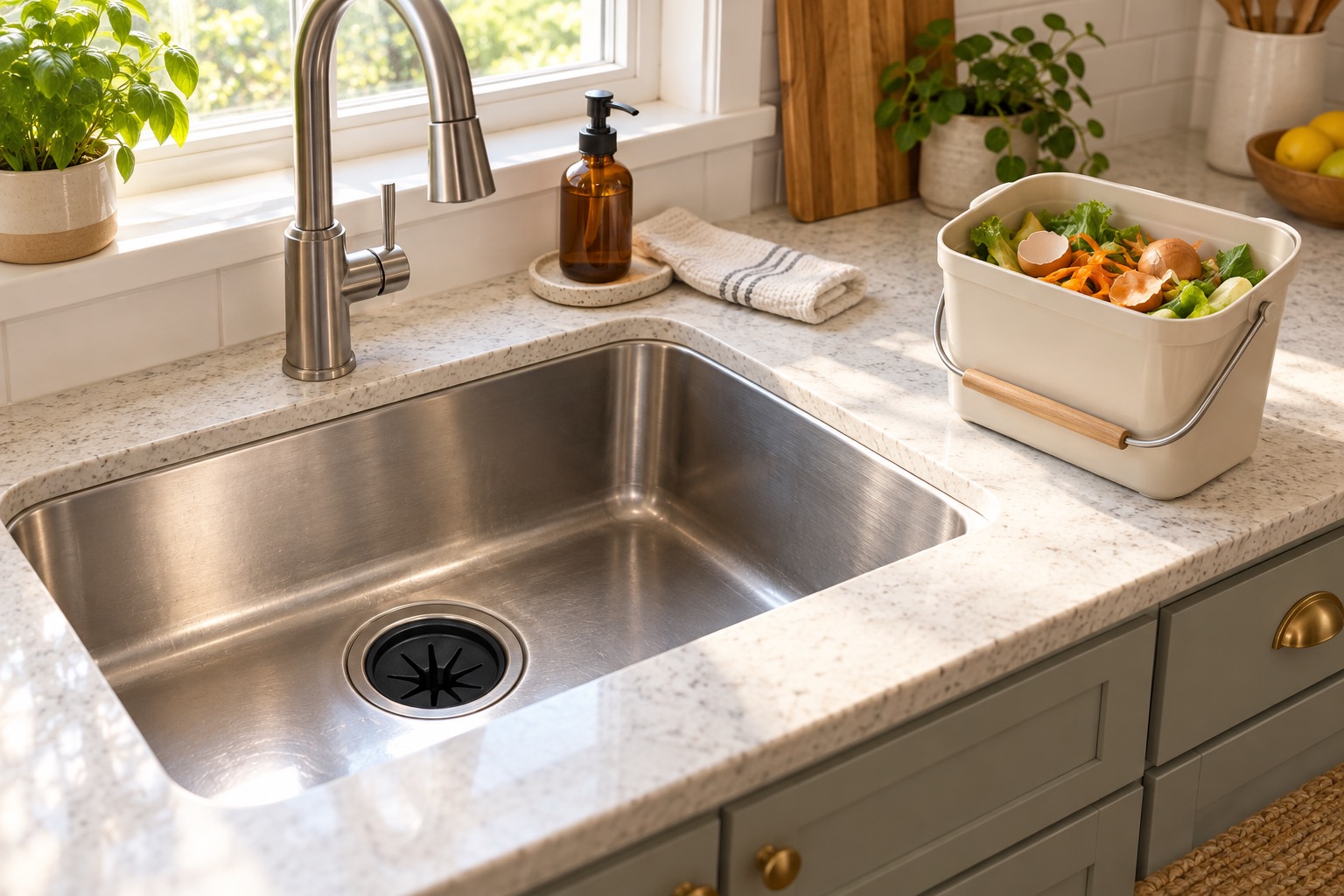
Scrape bulk scraps into the locally appropriate organics collection or waste container. Use the disposal for the smaller amounts your particular model and wastewater system permit. InSinkErator's operating guidance calls for cold water during grinding; use the flow and run-on procedure specified for your model rather than guessing from the sound alone.
Do not pack a chamber full and expect the motor to sort everything out. Keep utensils, packaging, glass and other non-food objects away from the opening. The sink is a busy work surface, so a simple habit of checking before operation can prevent a dropped spoon becoming a service call. Make sure everyone using the kitchen knows the correct control and understands that quiet does not mean isolated from power.
A stronger motor does not protect the plumbing
Keep fats, oils and grease out of the drain. Toronto Water explains that these materials contribute to pipe blockages. Let cooking fats cool safely and dispose of them through the appropriate local waste route. Do not rely on hot water or detergent to turn an unsuitable disposal habit into a suitable one.
Fibrous scraps, large quantities of starch, hard pits and other challenging foods need model-specific judgment. Manufacturers differ in what they permit, and a municipal restriction can be stricter than a product claim. A practical household rule is to put bulk peelings, coffee grounds and meal leftovers in the organics container rather than using the disposer as the default bin. It avoids arguments over whether a machine can grind a particular item while ignoring the drain.
Septic systems have to store and treat the solids
On septic, ground food adds solids and organic loading to a system already treating household wastewater. EPA recommends eliminating or limiting disposer use. More solids can change the pumping needs of a particular tank; the correct interval depends on occupancy, tank size, loading and the measured condition of the system.
A product described as septic-safe is not approval for your installation. Ask the local onsite-wastewater authority or the professional responsible for your system before adding a disposer. Record that advice with the septic service history. Additives and fine grinding do not make solids vanish, and they do not remove the need to inspect and maintain the tank and drainfield. Composting or approved organics collection can keep those scraps out of the wastewater system entirely.
Distinguish a jam from a drain blockage
A motor that hums without normal grinding suggests a different problem from a unit that spins while water remains in the sink. A silent unit could have a supply, control, overload or appliance fault. These are clues for a service description, not a reason to keep cycling the switch. Turn it off if operation is abnormal.
Note the model, what happened immediately beforehand, whether the sink drains and whether there is leakage. If other fixtures also back up, the problem may be farther along the drainage system. Stop adding water and contact a plumber. If wastewater appears, keep people away from contamination. Do not open fittings under a full sink or add drain chemicals and then expect a technician to work safely without knowing what was used.
A jam is a power-isolation problem first
Switch off and isolate the disposer from its electrical supply before any inspection or manufacturer-permitted jam clearing. For a safely accessible plug-in unit this means unplugging it; a hardwired unit needs the correct circuit isolated. Keep others from restoring power. If you cannot confidently identify and isolate the supply, leave the unit alone and call qualified help. Never put your hand inside.
Follow the instructions for the exact model. InSinkErator's current support page describes different methods and overload arrangements for different series, which is precisely why a universal wrench-and-reset recipe is inappropriate. Do not force unfamiliar parts, repeatedly reset a tripping device or reach for improvised tools. Burning smells, shock sensations, damaged wiring or water near electrical parts are reasons to stop and seek professional service.
Replacement involves more than matching horsepower
A replacement must fit the sink mounting arrangement, available cabinet space, drain geometry and electrical connection. An installer should check the supported weight, accessible controls, drainage and any dishwasher connection, along with local plumbing and electrical requirements. Increasing motor power does not cure an unsuitable drain layout.
Before ordering, photograph the existing model label and the overall cabinet arrangement without moving wiring or opening electrical covers. Ask whether the quote includes removal, needed adapters, proper connections and a leak and operating check. A tenant should send the fault to the landlord or manager rather than replacing supplied equipment unilaterally. Responsibility and permission depend on the lease and applicable tenancy rules, not the apparent simplicity of a product video.
Make maintenance boring and repeatable
Keep the model instructions available, check the cabinet periodically for moisture and report a persistent smell rather than disguising it indefinitely. Cleaning procedures, removable parts and suitable products vary. Isolate power as required before cleaning, never mix cleaning chemicals, and do not assume a social-media ice, acid or boiling-water trick is approved for your appliance and plumbing.
A useful handover note is short: approved use, how to stop and isolate it, where the manual is, and whom to call. After professional repair, ask what failed and what habit or system correction will prevent recurrence. If repeated blockage continues despite reasonable use, discuss the drain itself and whether keeping the disposer is worthwhile. Convenience should not depend on repeated emergencies under the sink.
Questions worth asking
- Is a disposer allowed and suitable for this wastewater system?
- Where is the exact model manual and safe electrical isolation point?
- Is this an appliance fault or a drain problem?
Sources
- US Environmental Protection Agency How to Care for Your Septic System
- City of Toronto What Not to Flush or Pour Down the Drain
- InSinkErator Fixing a Jammed Garbage Disposal
- InSinkErator How To Use a Garbage Disposal
- InSinkErator How a Garbage Disposal Works
- InSinkErator Installation and Troubleshooting Support