

Electrical
Home batteries: chemistry, usable capacity and critical-load backup
Understand LFP, other lithium-ion chemistries and saltwater batteries, then ask what the complete system can actually keep running.
Our articles are a starting point, not a professional assessment of your home.
DraftA work in progress, prepared by the HouseIQ.pro team.Editorial and professional review are not yet complete.
The Big Picture
Choose a supported, certified system around the loads you need—not a chemistry label or an advertised cycle count.
Start with what must keep running
Before comparing batteries, walk through a plausible outage in your own home. Which loads protect people, prevent property damage, or preserve essentials? A well pump, sump pump, refrigerator, furnace blower and a few lights form a very different brief from an electric range, clothes dryer and vehicle charger. Include communications equipment, but remember that a powered router cannot restore a failed outside network.
Write a list with the appliance name, normal power, starting demand where relevant, and hours of operation. Ask the designer to check the actual equipment rather than estimating from the number of bedrooms. This article concerns chemistry and backup design; solar production and bill savings are separate decisions covered in the related solar guides.
LFP is a lithium-ion chemistry
Comparing “lithium-ion versus LFP” is like comparing vehicles with hatchbacks: one is a family and the other belongs to it. Lithium iron phosphate, abbreviated LFP, is a lithium-ion chemistry. Nickel manganese cobalt, or NMC, is another. A quote that says only lithium-ion leaves an important question unanswered.
Sandia's energy storage handbook describes LFP's relatively strong thermal stability and lower energy density compared with common layered oxide chemistries. Those are cell-level characteristics, not a guarantee that one complete product is safe in every location. Ask for the exact chemistry and complete system model. A well-designed enclosure, protective controls and a suitable installation still matter. Do not infer chemistry from a cabinet's shape, price or marketing colour.
Saltwater is a different branch of the family
Saltwater batteries use an aqueous electrolyte in particular sodium-based designs. They are not simply a household container of saltwater, and not every sodium battery is a saltwater battery. Sandia distinguishes aqueous sodium-ion technology from other sodium systems, including technologies operating at high temperatures.
A water-based electrolyte can offer a useful flammability advantage, but that does not remove electrical hazards or establish useful backup power. Compare physical size, delivered power, available capacity, charging rate, temperature range and service support on the actual offered system. Ask who supplies replacement parts and honours the warranty locally. Historic demonstrations establish that a technology can work; they do not establish that a supported residential product is available for your house today.
Compare usable energy with usable power
Think of stored energy as the amount in a tank and power as the rate at which it can leave. Kilowatt-hours, or kWh, describe energy. Kilowatts, or kW, describe power. Enough energy for an overnight load does not necessarily mean enough starting power for a pump or compressor.
A simple planning example is 8 kWh of delivered usable energy supporting an average 1 kW load for about eight hours. That is arithmetic, not a product promise: reserves, conversion losses, temperature and changing loads alter the result. Ask the designer for a load-specific estimate that states these assumptions. Also ask how simultaneous loads are managed. A kitchen appliance starting while a pump runs may matter more than the average overnight consumption.
Depth of discharge needs a defined denominator
Depth of discharge describes how much of a stated battery capacity has been used. The important word is stated. Nominal capacity, manufacturer-allowed usable capacity, and the energy remaining after an owner-selected backup reserve are different quantities. Two brochures can advertise the same percentage while delivering different usable energy.
Do not adopt a universal discharge limit from a chemistry comparison chart. The battery management system and manufacturer's operating instructions define the permitted window. Ask whether the displayed zero percent includes an inaccessible protective reserve, and how a backup reserve changes daily operation. For example, saving more energy for an outage leaves less available for routine time shifting. The setting should reflect your priorities without overriding the manufacturer's protective controls.
A cycle count is not a calendar
Battery aging occurs with time as well as use. Temperature, charging conditions and discharge patterns affect it. A large laboratory cycle number is therefore not an unconditional number of years in your home. Read the warranty for duration, allowable use, energy-throughput limits, retained capacity and exclusions.
Ask the supplier to explain a replacement scenario in ordinary language: if capacity falls, what measurement establishes a claim, who diagnoses it, and who pays labour and transport? Keep the written answer with the quote. Also distinguish a battery warranty from inverter and communications warranties. A storage system is useful only when its components continue working together. This is a better purchasing conversation than multiplying an advertised cycle count by a convenient assumption about daily use.
Certification addresses the complete system
UL 9540 addresses energy storage systems and equipment. UL 9540A is a test method evaluating thermal runaway fire propagation; the similar names do not mean the same thing. Ask which complete combination of battery, inverter and controls has the required certification for your jurisdiction, and how applicable fire-test information supports its proposed placement.
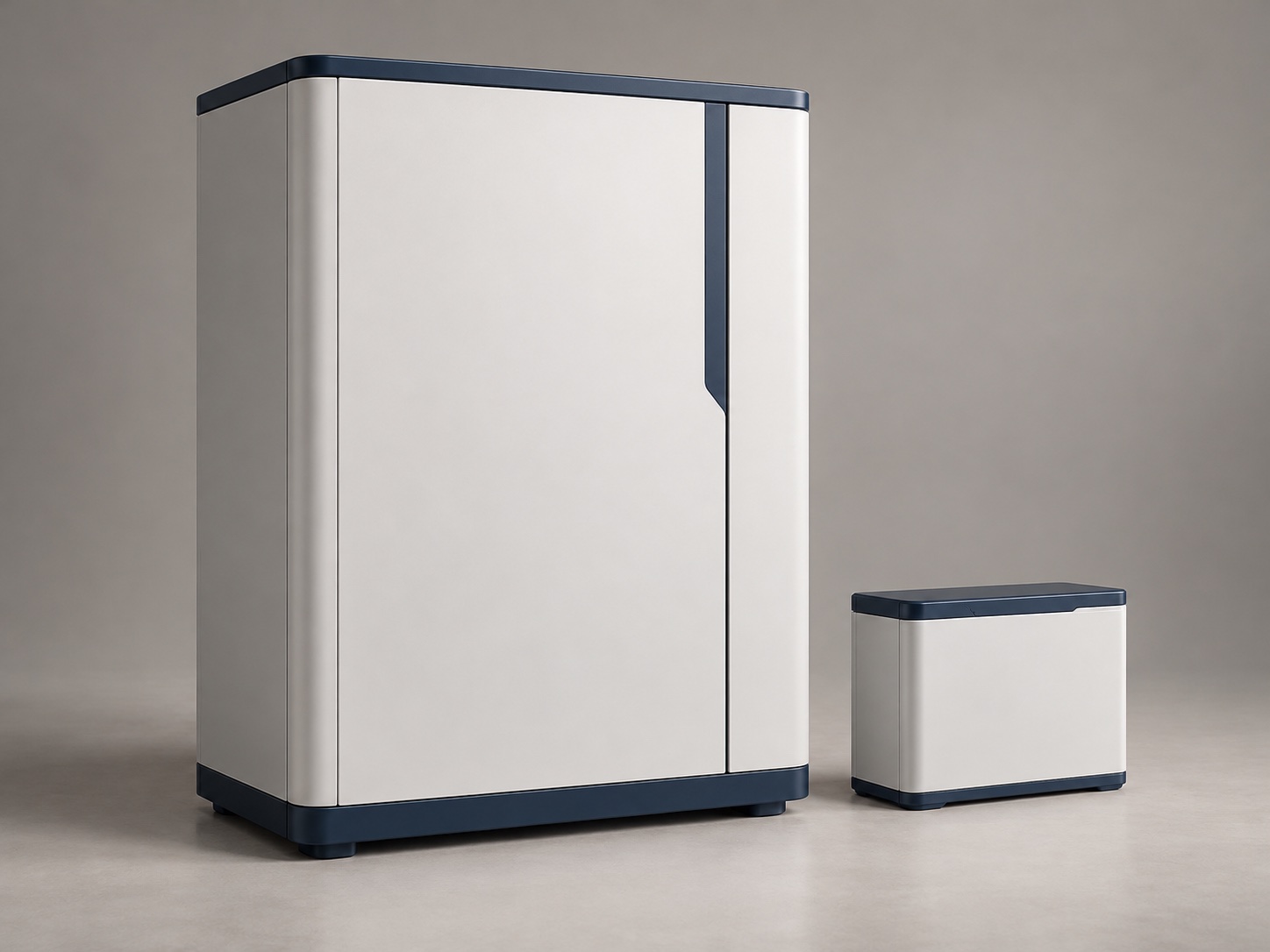
Location is part of the design. Have the installer address temperature limits, required clearances, physical impact, access, flood exposure and local approval. A product suitable outdoors is not automatically suitable in every garage or occupied room. The illustration here is a product concept, not a placement recommendation. Keep the operating and emergency information accessible, and have any damage, abnormal heat or system warning assessed through the manufacturer's service process.
Critical-load backup requires more than a battery
An outage-capable system needs compatible power conversion, controls and equipment that safely separates the backed-up installation from the utility when required. A design may use a dedicated backup panel for selected circuits or approved control equipment to manage broader household loads. Tesla's published designs illustrate both whole-home and partial-home configurations; they are an example, not a product recommendation.
Ask a qualified installer to identify which circuits remain powered, what shuts down automatically, and how utility approval and permits are handled. Existing solar does not automatically continue operating in an outage; compatibility and islanded operation must be designed. Do not attempt wiring, transfer arrangements or backfeeding through an outlet. A labelled circuit schedule and a commissioning demonstration are homeowner deliverables, not optional finishing touches.
Test the outage plan before relying on it
At handover, ask for a supervised demonstration of the approved backup sequence. Confirm that the intended loads run, that excluded loads behave as expected, and that household members understand the normal controls. Ask how the system restarts after depletion and what conditions allow solar to recharge it during an extended outage.
Keep a short operating record: installed models, warranty registration, installer contact, essential circuit list, reserve setting and service alerts. Revisit the plan after adding a heat pump, vehicle charger or other substantial load. For medically essential equipment, obtain a continuity plan appropriate to that equipment rather than assuming a residential battery alone is sufficient. The useful outcome is a demonstrated capability for your actual household, supported by a maintainable system.
Questions worth asking
- Which lithium-ion chemistry or aqueous sodium technology is actually supplied?
- What usable energy and continuous/starting power are available at our expected temperature and reserve setting?
- Which circuits run during an outage, and how is utility isolation achieved by approved equipment?
- What complete-system certification, warranty limits and local service arrangements apply?
Sources
- US Department of Energy Solar Integration: Solar Energy and Storage Basics
- Sandia National Laboratories / US DOE Energy Storage Handbook, Chapter 3: Lithium-Ion Batteries
- Sandia National Laboratories / US DOE Energy Storage Handbook, Chapter 4: Sodium-Based Battery Technologies
- UL Solutions Energy Storage System Testing and Certification
- UL Solutions UL 9540A Test Method for Battery Energy Storage Systems
- Tesla Powerwall System Design