

Homeowner to-do list
Use these steps to turn the article’s guidance into a practical plan.
Tick items as you go. Checkmarks are not saved to your account.
The same journey can run in reverse
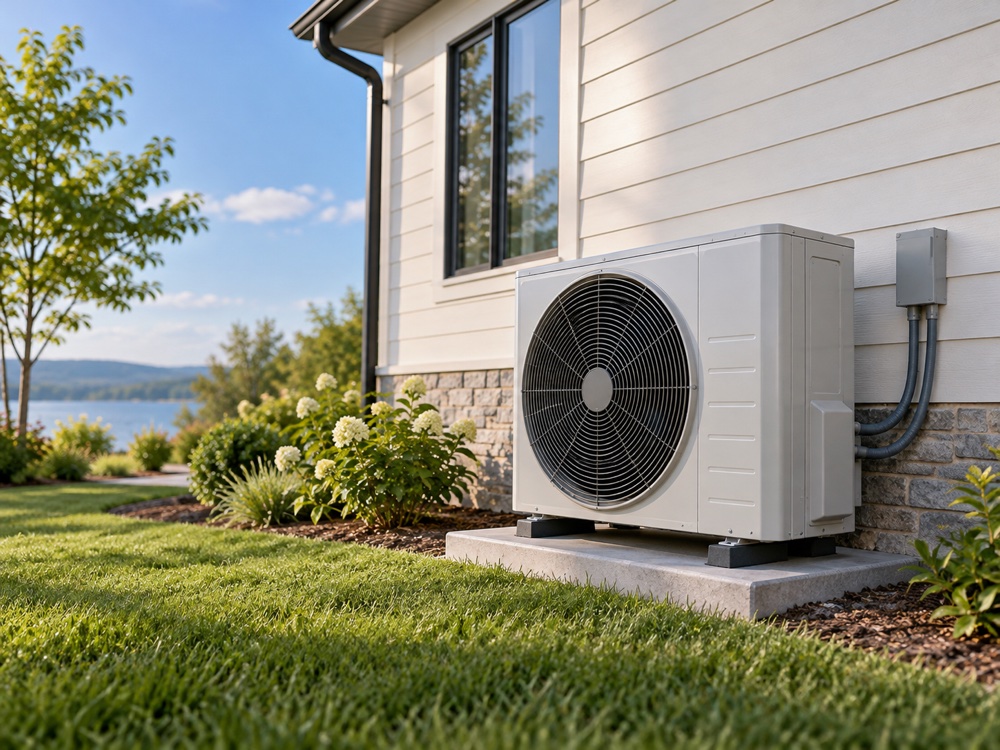
An air conditioner carries unwanted heat out of your home using a refrigerant circuit. An air-source heat pump can reverse that process and bring heat indoors. Outdoor air still contains thermal energy when it feels cold to us; the equipment uses electricity to move that energy to a useful temperature.
A ground-source system exchanges heat with the ground through a loop. That is a different installation, with site and drilling or excavation considerations. “Heat pump” describes a family of systems, not a single box that fits every property.
Capacity and efficiency answer different questions
Capacity asks how much heating or cooling the system can deliver under stated conditions. Efficiency asks how much energy it uses to do so. Both can change with outdoor conditions. A strong seasonal rating does not tell you whether a particular model will meet your home’s heating demand on a cold design day.
Ask for the proposed equipment’s performance at the local design temperature and the home’s calculated load at that temperature. Also ask how it operates in milder weather. Matching the house matters more than choosing the biggest unit.
Start with the rooms, not the old nameplate
A replacement proposal should use the actual house: its windows, insulation, leakage, layout and climate. Tell the contractor about renovations already planned. New windows or air sealing can change the load, so a copy of the old equipment size is not a complete assessment.
List rooms that already run hot or cold. Existing ducts may need repairs or changes; ductless indoor units need a distribution plan that considers doors and separated rooms. One head in a hallway should not be assumed to condition every closed bedroom.
Ask what happens on the hardest days
Some designs use supplemental heat when demand exceeds available heat-pump output. The proposal should explain the backup source, when it operates and how the controls coordinate it. Avoid interpreting any appearance of auxiliary heat as proof of failure; ask what is expected for your design.
In cold climates, discuss outdoor-unit placement, snow and ice, defrost and drainage. In humid climates, discuss moisture removal during mild weather as well as peak cooling. These are questions for a system designer, not adjustments to improvise after installation.
Understand what the installation includes
Request a written scope covering equipment, distribution, controls, electrical assessment, condensate handling, permits and commissioning. Refrigerant work and electrical connections belong with appropriately qualified trades. Shared buildings may also require owner or condominium approval.
Ask who will demonstrate normal operation, filter care and the difference between expected sounds and a service concern. Get model numbers, warranties and measured commissioning results, rather than only a statement that the system turns on.
Compare running costs with local assumptions
Operating cost depends on the home, climate, electricity tariff, any backup fuel and control strategy. Ask the estimator to show those assumptions and use recent local rates. A general claim about efficiency cannot establish your personal payback.
Check incentive eligibility and required pre-work assessments before signing. Programs change. A useful proposal should still make sense as a comfort and equipment decision after you separate the rebate from the underlying scope.