

Homeowner to-do list
Use these steps to turn the article’s guidance into a practical plan.
Tick items as you go. Checkmarks are not saved to your account.
Locate the moisture first
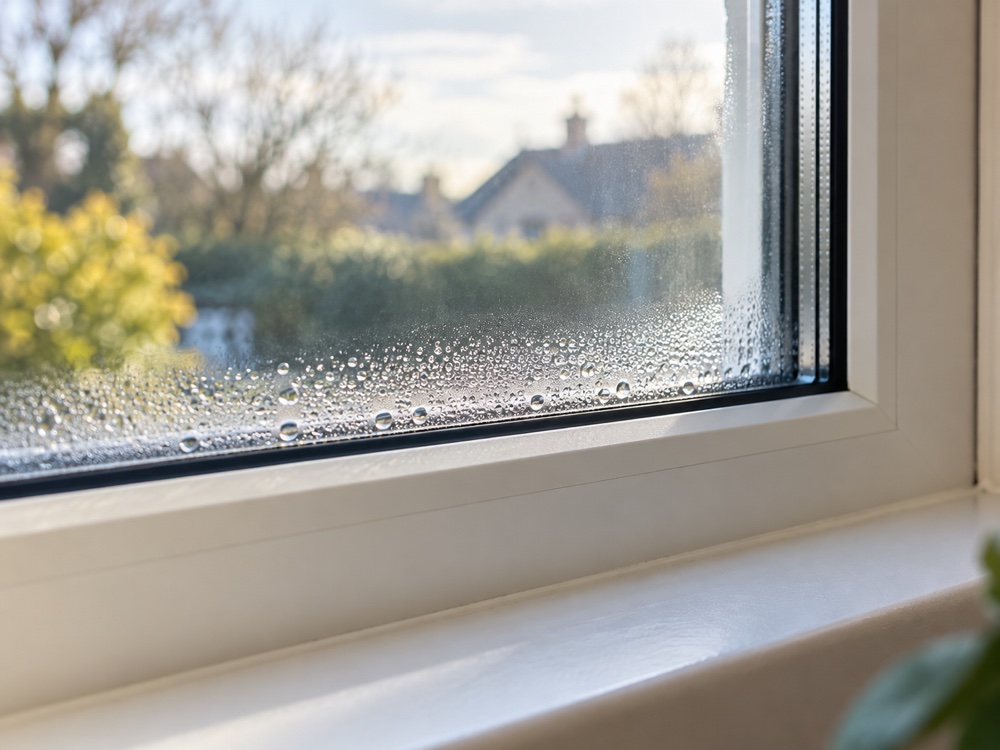
Before deciding the window has failed, establish where the water is. Room-side condensation can be wiped from the indoor surface. Exterior dew is on the weather side. Persistent fog within a sealed multi-pane unit cannot be wiped away from either accessible surface. Those are different clues.
Do not lean out or climb to check the exterior. Observe only from a safe position. Photograph what you can see and note the time and weather.
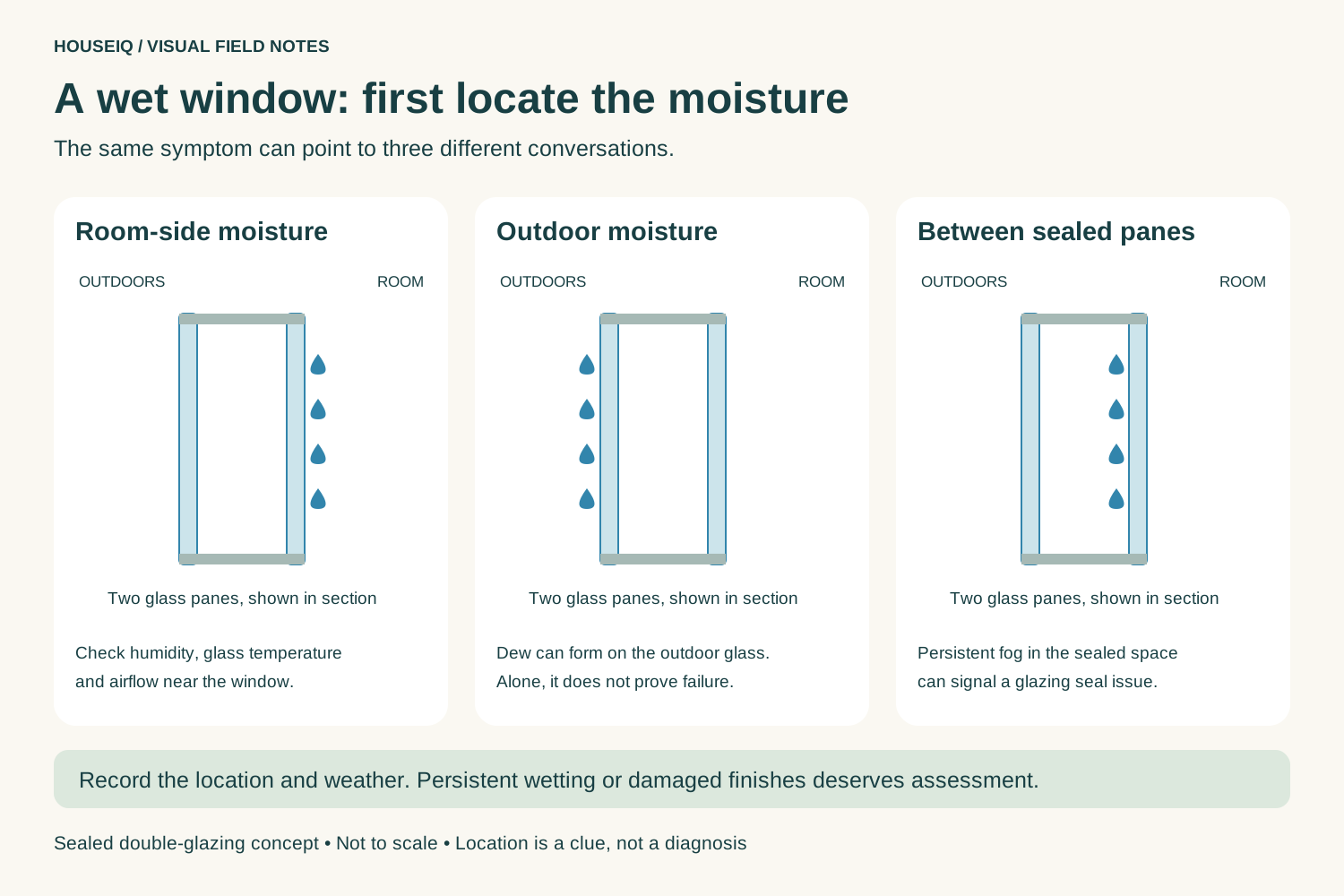
Sealed double-glazing concept, not to scale. Consider humidity, glass temperature and airflow for room-side wetting. Outdoor dew alone does not establish failure. Persistent fog within the sealed cavity can indicate a glazing-seal issue; location is a clue, not a diagnosis.
Room-side water connects air and surface temperature
Water can condense when the glass or frame is below the dew point of the nearby air. Indoor moisture, outdoor temperature, window performance and airflow around the glass all influence the result. A cold snap can reveal a problem that was not visible the previous week.
Notice whether many windows are affected or only one room. Moisture after showers suggests different questions from staining that appears after wind-driven rain. Neither pattern is a complete diagnosis, but both help direct the inspection.
Start with moisture sources and normal operation
Use bathroom and kitchen exhaust as intended, check that accessible grilles are unobstructed, and note any unusual moisture-producing activity. If you use a humidifier, review its settings and instructions in light of the observed condensation. Do not adopt a single humidity target from another climate as a guarantee against window water.
A room sensor can help record trends, but its location and accuracy matter. Note conditions near the room’s normal occupied area, and share the readings with the person evaluating the problem. Avoid sealing or disabling ventilation to make a room feel warmer.
Exterior dew and between-pane fog need different responses
Exterior dew can occur on a well-insulated window under particular weather conditions. By itself it does not establish a defective unit. Watch whether it clears as the weather changes.
Persistent moisture between sealed panes can indicate a glazing-unit seal problem. Ask a window professional to identify the unit and review repair or replacement options and warranty coverage. It may be a glazing issue rather than a reason to replace every frame in the house.
Protect the surrounding materials
Dry accessible room-side water with a cloth and investigate repeated wetting rather than letting it collect on finishes. Report soft wood, persistent staining, mould or water arriving during rain. Condensation and rain leakage can coexist, so the label “just condensation” should not end an investigation of damage.
Do not block drainage openings or add sealant at random. A window relies on designed paths to manage water, and an apparently helpful bead can interfere with them. Work involving old finishes, damaged assemblies or uncertain materials needs suitable precautions and qualified advice.
Take a useful record to the appointment
Bring photos identifying the affected surface, dates, weather, room conditions and any recent changes to heating, ventilation or occupancy. Ask whether the proposed repair addresses the source of moisture, the cold surface, a failed glazing unit or a water-entry detail.
A new window can improve interior surface temperatures, but it cannot promise to fix every moisture problem. Match the work to the evidence and keep the assessment with the warranty and installation record.