


Comfort IQ / Build IQ
Why windows get wet on a Canadian winter morning
Connect the moisture in the room with the temperature of the glass before deciding what needs to change.
Our articles are a starting point, not a professional assessment of your home.
DraftA work in progress, prepared by the HouseIQ.pro team.Editorial and professional review are not yet complete.
What is happening?
Water vapour can become liquid when air meets a surface cold enough for condensation. In winter, the room-facing glass may be much colder than the air beside it. Very cold glass can collect frost. NRCan describes this as a familiar example of moisture and temperature working together.
Sources: [1]
Why the same home can behave differently
Cooking, bathing and everyday living contribute moisture. Weather changes the temperature of the window. A change to air leakage or ventilation can also change how much moisture stays indoors. NRCan notes that tighter windows can sometimes leave a home with more indoor humidity than before.
That is why this entry gives no single humidity setting for every Canadian home. Start with the conditions and the window, then discuss suitable targets for your home.
First, notice which side is wet
Room-side moisture belongs to a different conversation from fog inside a sealed glass unit. NRCan distinguishes condensation between the panes of a sealed unit from moisture between separate storm windows. A photo of the location is more useful than calling every wet window a failed seal.
Sources: [2]
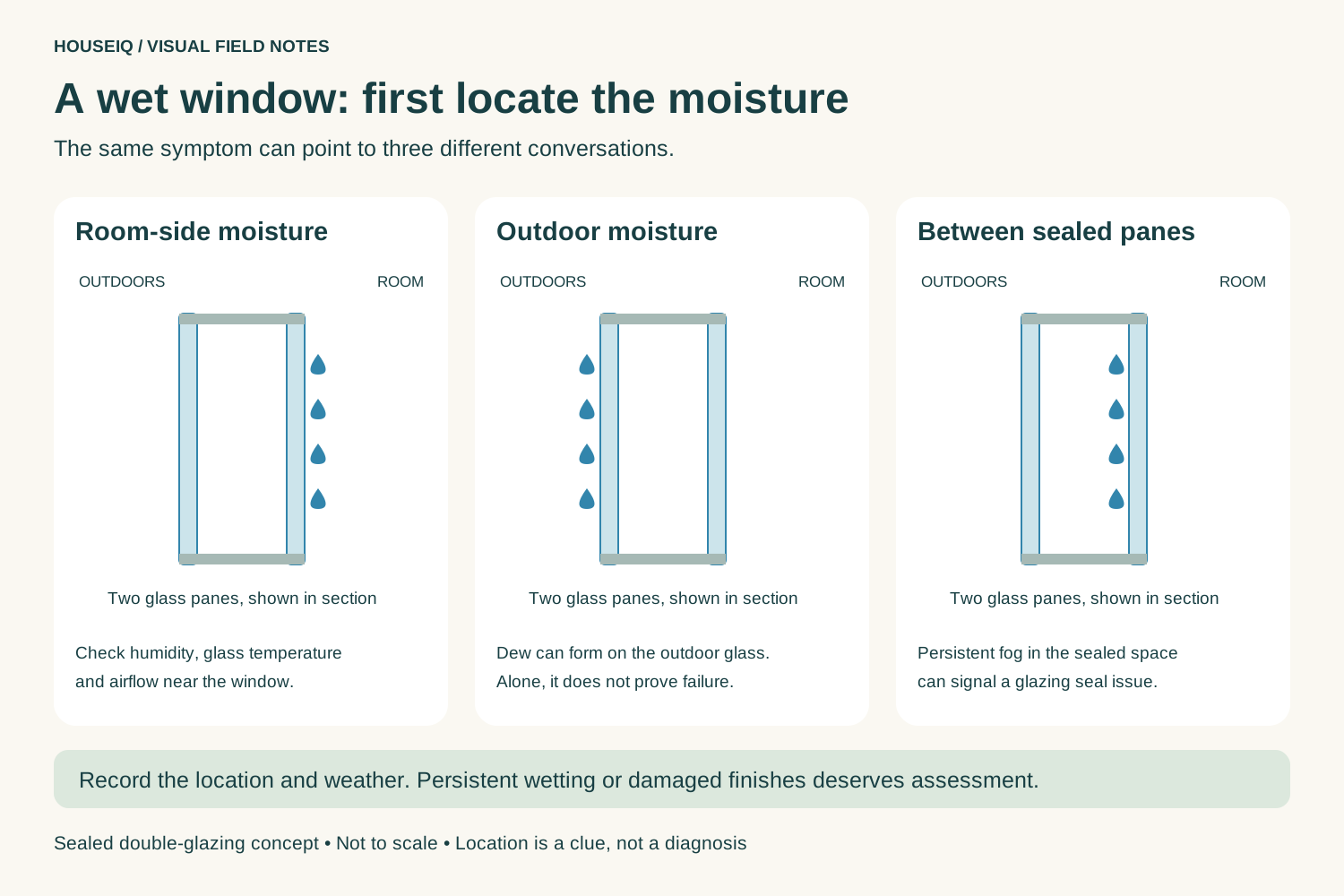
Sealed double-glazing concept, not to scale. Consider humidity, glass temperature and airflow for room-side wetting. Outdoor dew alone does not establish failure. Persistent fog within the sealed cavity can indicate a glazing-seal issue; location is a clue, not a diagnosis.
Gather a few useful clues
HouseIQ observation prompts: note the room, date, outdoor weather and where the moisture appears. If a humidity meter is available, record the indoor temperature alongside its reading. Is it one window or several? Does the pattern follow bathing, cooking or a cold spell?
Share recurring wetness or damage with the landlord, property manager or a qualified building professional. Tenants can document the pattern and request an assessment without changing building systems.
What to do with the wet window today
Wipe accessible room-side water from the glass and sill and note whether it returns. Protect finishes from repeated wetting while the cause is investigated. Do not chip ice from glass, apply concentrated heat or improvise a repair around the frame.
Use existing bathroom and kitchen exhaust as intended and keep their accessible grilles clear. If a humidifier is running, review its instructions and settings. Opening curtains may improve room-air circulation near the glass, but keep heaters and required clearances unobstructed. None of these observations proves that the window or ventilation system is performing correctly.
Read the pattern across rooms and weather
A window that wets during a severe cold spell may be responding to a colder surface than it sees in milder weather. A bathroom window that wets after showers points toward a different timing pattern. Record indoor temperature with humidity: a percentage without temperature leaves out important context.
If only one opening is affected, photograph its glass, frame and adjacent finishes from a safe position. Note closed blinds, blocked air circulation and any nearby moisture source. If many openings change after an air-sealing renovation, bring the ventilation and humidity plan back into the discussion instead of blaming every new seal.
What a better window can—and cannot—change
A better-insulated window can keep its room-side surface warmer under the same conditions, reducing the likelihood of condensation. It does not remove the need to manage indoor moisture. Ask whether a replacement recommendation addresses surface temperature, a failed sealed unit, a damaged frame or a water-entry detail.
Fog between the panes of a sealed insulating-glass unit needs a different assessment from room-side water. Separate storm windows also create a different assembly from sealed double glazing. Identify the construction before choosing a repair or assuming that a whole-window replacement is necessary.
When to arrange an assessment
Recurring wetting, soft or stained finishes, mould, water associated with rain or unexplained changes deserve prompt investigation. Do not seal drainage openings or cover damaged material to hide the symptom. Work involving old finishes or suspect insulation may require hazardous-material assessment before disturbance.
Ask the professional to explain the likely moisture source, surface conditions and ventilation findings separately. Request a plan for checking whether the intervention worked through the weather that caused the problem. Tenants and residents of shared buildings can provide the same record to their landlord or manager without altering common systems.
Questions worth taking with you
- Is the moisture on the room surface, in a sealed unit, or associated with water entering around the opening?
- How do surface temperature, indoor moisture and ventilation interact in this home?
- What observations would help confirm the cause before choosing work?
Sources
- Natural Resources Canada Keeping the Heat In — Section 2: How your house works
- Natural Resources Canada Keeping the Heat In — Section 8: Upgrading windows and exterior doors
- U.S. EPA A Brief Guide to Mold, Moisture and Your Home
- NFRC Cut Condensation