

Insulation / Comfort / Renovation
Attic insulation types: a visual guide to what you may find
Compare cellulose, loose-fill fibreglass, batts, mineral wool and older vermiculite before planning an upgrade.
Our articles are a starting point, not a professional assessment of your home.
DraftA work in progress, prepared by the HouseIQ.pro team.Editorial and professional review are not yet complete.
What the materials can look like
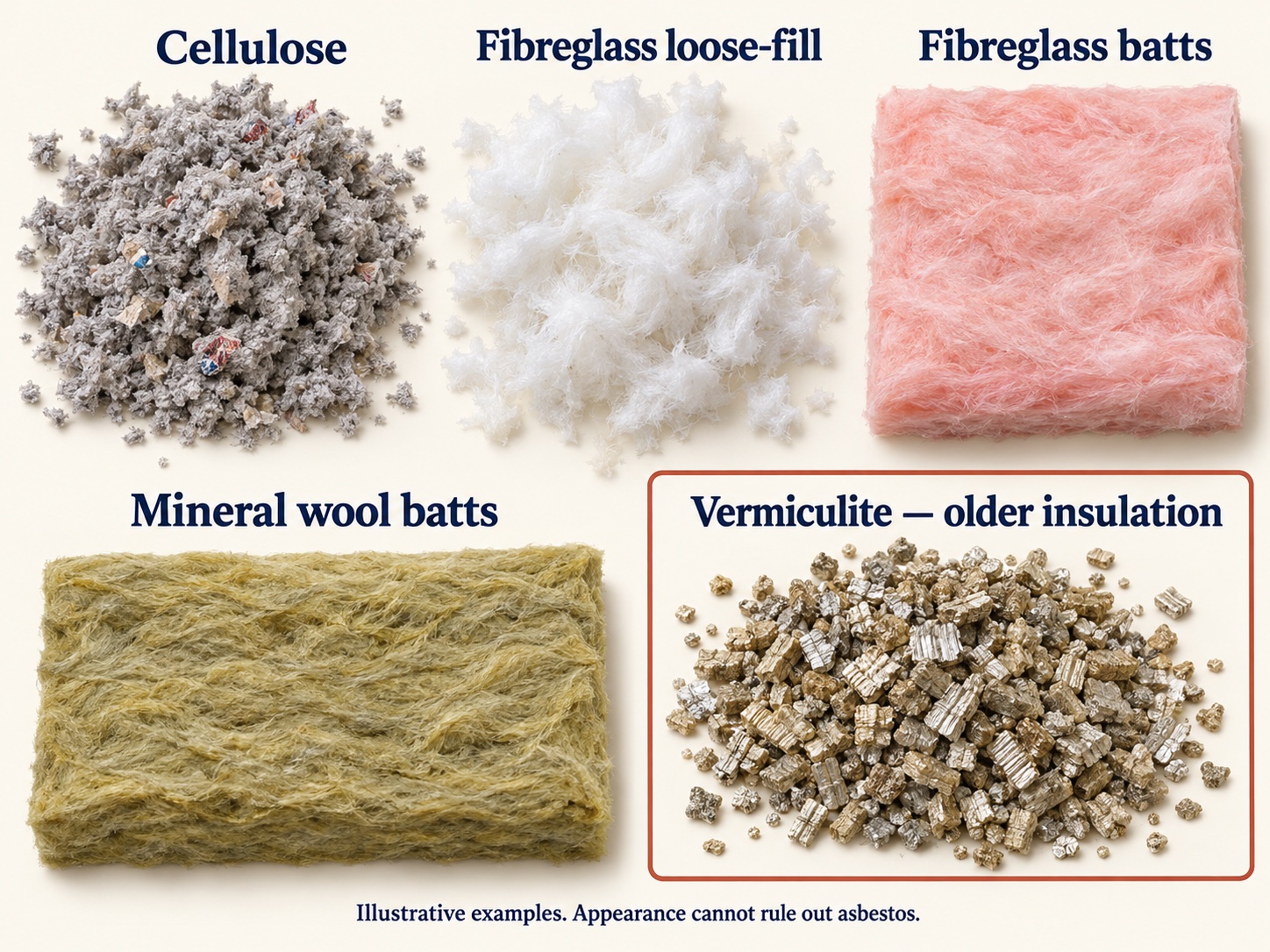
The illustration compares grey paper-like cellulose, fluffy loose fibreglass, fibreglass blankets, denser mineral-wool batts and granular vermiculite. Colours vary by product, age and lighting. These are illustrative samples, not photographs of materials taken from a house.
An attic can contain several layers installed decades apart. Do not rake, lift or collect unknown insulation to match it to a picture. Appearance cannot establish whether asbestos is present. Start with records and qualified advice.
Illustrative samples of cellulose, loose-fill fibreglass, fibreglass batts, mineral-wool batts and older vermiculite. Appearance cannot rule out asbestos. Colours and apparent cell sizes are illustrative. Do not disturb existing insulation to compare it with these samples.
Cellulose: loose paper fibres for irregular spaces
Cellulose is processed paper fibre treated for fire resistance. It often looks grey and finely shredded. Loose material can form a blanket around irregular framing, making it a useful option to compare for open attic areas.
Watch for settlement and uneven coverage. Ask for the product’s specified coverage, quantity and installed and settled thicknesses. Fire treatment does not permit contact with every hot surface, and adding cellulose does not replace ceiling air sealing.
Sources: [1]
Fibreglass loose-fill: a fluffy blanket
Loose-fill fibreglass has a light, fibrous appearance; many products are white, but colour is not a dependable identifier. Blowing can cover spaces where fitting individual batts would be awkward.
The useful comparison is the specified installation, not how fluffy the material looks. Ask how coverage will be checked around obstacles and at the edges. One depth reading does not demonstrate an even blanket across an attic.
Fibreglass batts and rolls: useful shapes that must fit
Batts are preformed blankets; rolls provide longer lengths. They can suit accessible, regular framing. Pink is a familiar colour, but other colours and facings exist.
Gaps, compressed edges and poor fitting around obstructions reduce performance. Batts stuffed into cracks are not air seals. Ask how the specified thickness will be maintained and whether any facing suits the existing moisture-control design.
Mineral wool: check the form and product
Mineral wool includes rock or stone wool and slag wool. Batts often look firmer and denser than fibreglass; loose-fill mineral wool also exists. ROXUL is a familiar name homeowners may associate with ROCKWOOL.
ROCKWOOL lists Comfortbatt for attic and framed-cavity applications. Noncombustibility and shape retention can be useful properties, but fitting, air sealing and required clearances still matter. Exterior Comfortboard is a different product: not every mineral-wool product is interchangeable.
Vermiculite: pause before disturbing older insulation
Expanded vermiculite is granular, with mica-like flakes that may appear grey, brown, silver or gold. It is included as an older material homeowners may encounter, not as a recommendation for new insulation.
Vermiculite insulation may contain asbestos. EPA advises treating it as potentially contaminated and leaving it undisturbed. Health Canada advises against using affected attics for storage or allowing children into them, and recommends trained professionals before renovation. Do not vacuum it, sample it yourself or move it aside to add insulation.
Arrange qualified assessment before planned air sealing, wiring or insulation work could disturb it. A familiar-looking layer above it does not make the underlying material safe to handle.
Choose the attic plan before the material
Insulation at the floor of a vented attic and insulation at the roofline belong to different assemblies. Spray foam at the roof deck is not simply another way to top up an attic floor. Ask for the intended air, thermal and moisture boundaries on a drawing.
Use the related attic guide for the wider discussion of air leakage, eaves, access hatches and ice dams. The assessment should resolve leaks, suspect materials and clearance concerns before the job is treated as a routine top-up.
Sources: [1]
Health Canada resources to keep with the plan
The printable asbestos infographic and current Health Canada guidance linked below explain why suspect materials should be assessed before disturbance. The web guidance includes vermiculite in attics and walls. Neither document identifies the material in a particular house.
Sources
- Natural Resources Canada Keeping the Heat In — Materials and insulation
- Health Canada Asbestos and your health — including vermiculite insulation
- Health Canada Asbestos in the home — printable infographic (PDF)
- U.S. Environmental Protection Agency Protect Your Family from Asbestos-Contaminated Vermiculite Insulation
- ROCKWOOL Comfortbatt — applications and product data
- ROCKWOOL Comfortboard — continuous exterior insulation
- ENERGY STAR Choosing the Appropriate Insulation Type