

Safety & security
Mould and moisture: investigate the cause before covering the mark
Recognize useful clues, understand the limits of testing, and know when cleanup needs professional containment.
Our articles are a starting point, not a professional assessment of your home.
DraftA work in progress, prepared by the HouseIQ.pro team.Editorial and professional review are not yet complete.
The Big Picture
A clean-looking finish is not the finish line. The moisture source, affected materials and safe cleanup scope all need to be resolved.
Mould is a moisture clue
Mould can grow when moisture remains available on suitable materials. Paper-faced drywall, wood, dust, fabrics and other ordinary household materials can support it. A leaking pipe is one source, but condensation on a cold surface can also supply water without an obvious plumbing failure. The first useful response is to ask why that particular location stayed damp.
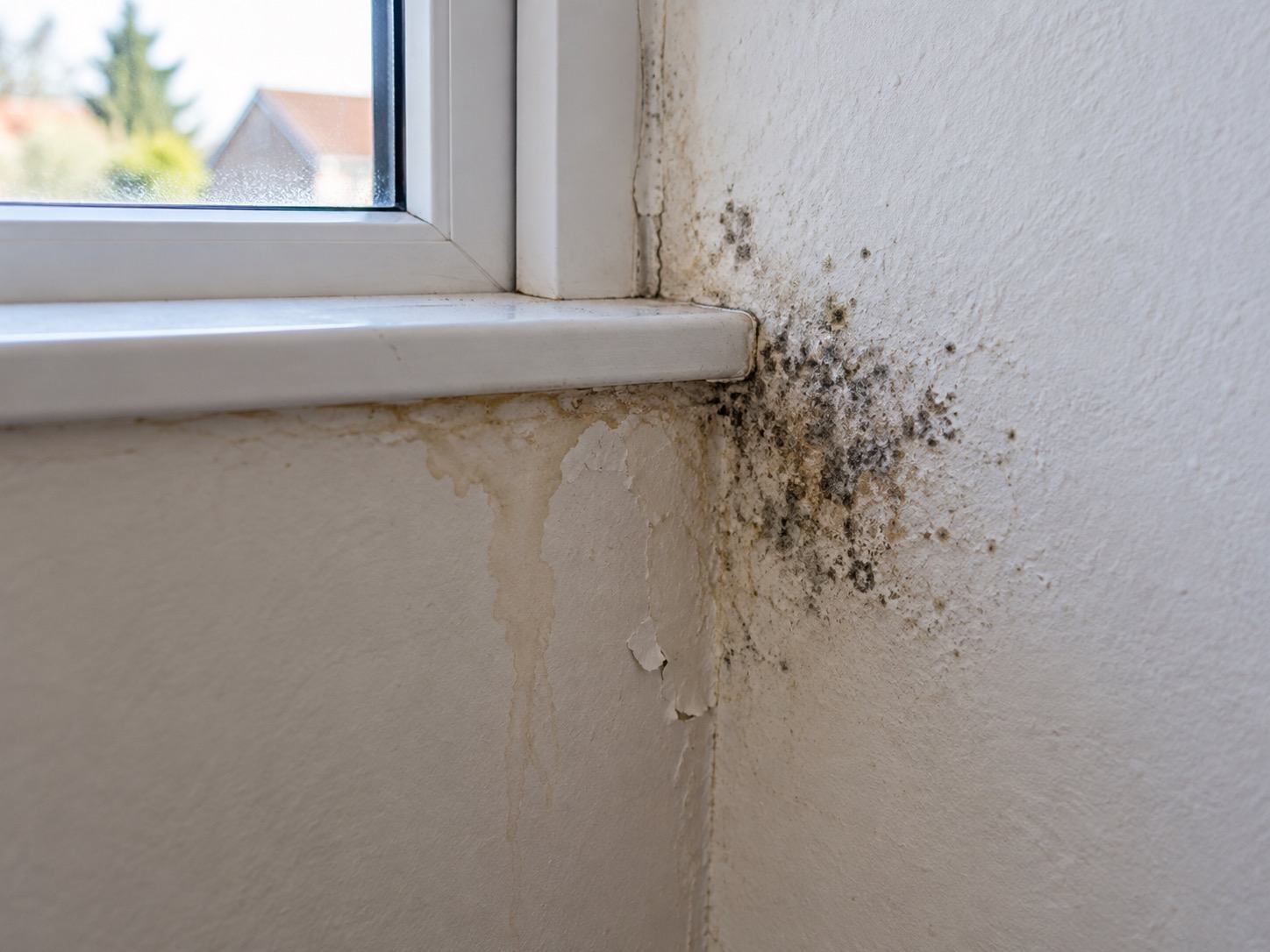
Photograph the area, note its approximate extent and record when it appeared. Include nearby plumbing, windows, exterior walls and recent weather in your notes. This gives a professional a starting point without requiring you to open a wall. A stain is not automatically mould, and a musty smell does not reveal the full affected area. Treat both as reasons to investigate rather than conclusions about a species.
Colour cannot establish toxicity
The phrase toxic black mould bundles together several different questions. Mould can have many colours. Stachybotrys chartarum is one greenish-black mould associated with persistently wet cellulose-containing materials, but a dark patch in a photograph cannot identify it or establish the exposure risk. Calling a patch mildew also does not make the moisture problem harmless.
CDC says it is generally unnecessary to determine the type before addressing mould and the water source. The practical response should follow the extent, materials, contamination and occupants' circumstances. Avoid reassuring or alarming people based on colour alone. If someone has persistent symptoms, they should discuss them with a healthcare professional; a building photograph or a consumer culture plate cannot diagnose the cause of those symptoms.
Follow the water, including condensation
Look for patterns without disturbing suspect materials. Marks that appear after wind-driven rain suggest a different investigation from spotting that grows around a cold window during winter. A bathroom ceiling, an exterior corner behind furniture and the base of a basement wall each have different possible moisture paths. More than one source can be present at the same time.
A hygrometer can help track indoor relative humidity, but room humidity alone does not describe the temperature and moisture at a hidden surface. A cold corner can become damp while the room reading seems ordinary. Ask whether the investigation needs plumbing repair, exterior water management, exhaust ventilation, dehumidification or an enclosure correction. Cleaning the visible patch repeatedly without changing the wetting pattern is maintenance of the symptom.
Surface growth and structural decay are different questions
Mould on a surface does not by itself establish that framing has lost strength. Conversely, an apparently small patch can sit in front of a larger concealed moisture problem. Soft finishes, swollen trim, sagging material, persistent wetness or visibly deteriorated timber warrant assessment beyond cosmetic cleaning. Do not test questionable framing by dismantling it or assume paint will stabilize it.
A moisture professional can investigate the extent of wetting; a qualified building professional may also be needed to assess structural damage. Ask each person what their inspection can and cannot establish. The useful deliverable is a description of affected materials, likely moisture sources and necessary repairs, with uncertainty identified. A species name on a laboratory report does not answer whether a floor, wall or roof remains structurally sound.
Testing should answer a specific unresolved question
EPA says sampling is usually unnecessary when visible mould is present. There are no federal airborne mould limits against which a sample can simply pass or fail a home. A consumer dish that grows something does not measure the condition of the building: spores are common in the environment, and the sampling method matters.
Before paying for testing, ask what decision the result would change. A qualified investigator may use sampling in a particular investigation or verification plan, but it should have a defined purpose, method and interpretation. For many households, finding and stopping the water and assessing damaged materials is a better first use of effort. A report that identifies a type without explaining the moisture source or repair scope leaves the central building problem unresolved.
Set the cleanup scope before disturbing the area
Small, straightforward surface problems and extensive hidden contamination are different jobs. EPA's homeowner guide uses about 10 square feet as a general point for consulting more detailed remediation guidance, but area alone is not a complete safety test. Sewage contamination, flood damage, HVAC involvement, hidden growth and susceptible occupants can justify professional help even when a visible patch seems limited.
For professional work, ask how the contractor will isolate the work area, control dust, protect occupants, handle affected porous materials and verify dryness before rebuilding. Do not aim fans at visible mould or begin sanding it. Hard surfaces and porous materials require different decisions, and simply killing growth does not necessarily remove it. Follow appropriate guidance and product instructions; never mix cleaning chemicals. A bleach smell is not proof of successful remediation.
Opening an older wall adds other hazards
Mould investigation can become renovation when finishes must be removed. Older paint may contain lead, and some older building materials can contain asbestos. Neither hazard is reliably cleared by a casual visual check. Suspect materials should be evaluated before cutting, sanding or demolition; a mould-cleanup quote should explain how these additional questions will be handled.
EPA's U.S. lead guidance specifically addresses pre-1978 housing, while building ages and legal requirements differ elsewhere. Do not transplant that date into a universal guarantee. Renters should document the concern and notify the responsible owner or manager through the applicable process rather than opening walls without authorization. If water is reaching electrical equipment or a ceiling is sagging, keep clear and obtain urgent qualified assistance before any cosmetic work.
Verify the repair before the wall disappears again
A completed job should account for the water source, the extent of removal or cleaning, drying and reconstruction. Ask what evidence shows that affected materials are dry enough to close in and whether the source repair has been tested under relevant conditions. A newly painted wall can hide a continuing leak as easily as it can finish a successful repair.
Keep before-and-after photographs, readings with their locations and dates, and the contractor's scope. Recheck the area after the weather or activity that previously triggered dampness. For a window corner, that could mean a cold spell; for an exterior leak, a rain event. Returning staining, odour or wetness deserves follow-up. The goal is a stable, dry assembly and a clear maintenance plan, not a promise that a home contains no spores.
Questions worth asking
- What supplied the moisture and has it been stopped?
- Could damage extend beyond the visible patch?
- What will a sample change about the repair plan?
- How will containment, drying and older-material hazards be handled?