

Outdoors / Plumbing / Electrical
Outdoor kitchens: plan the weather and utilities first
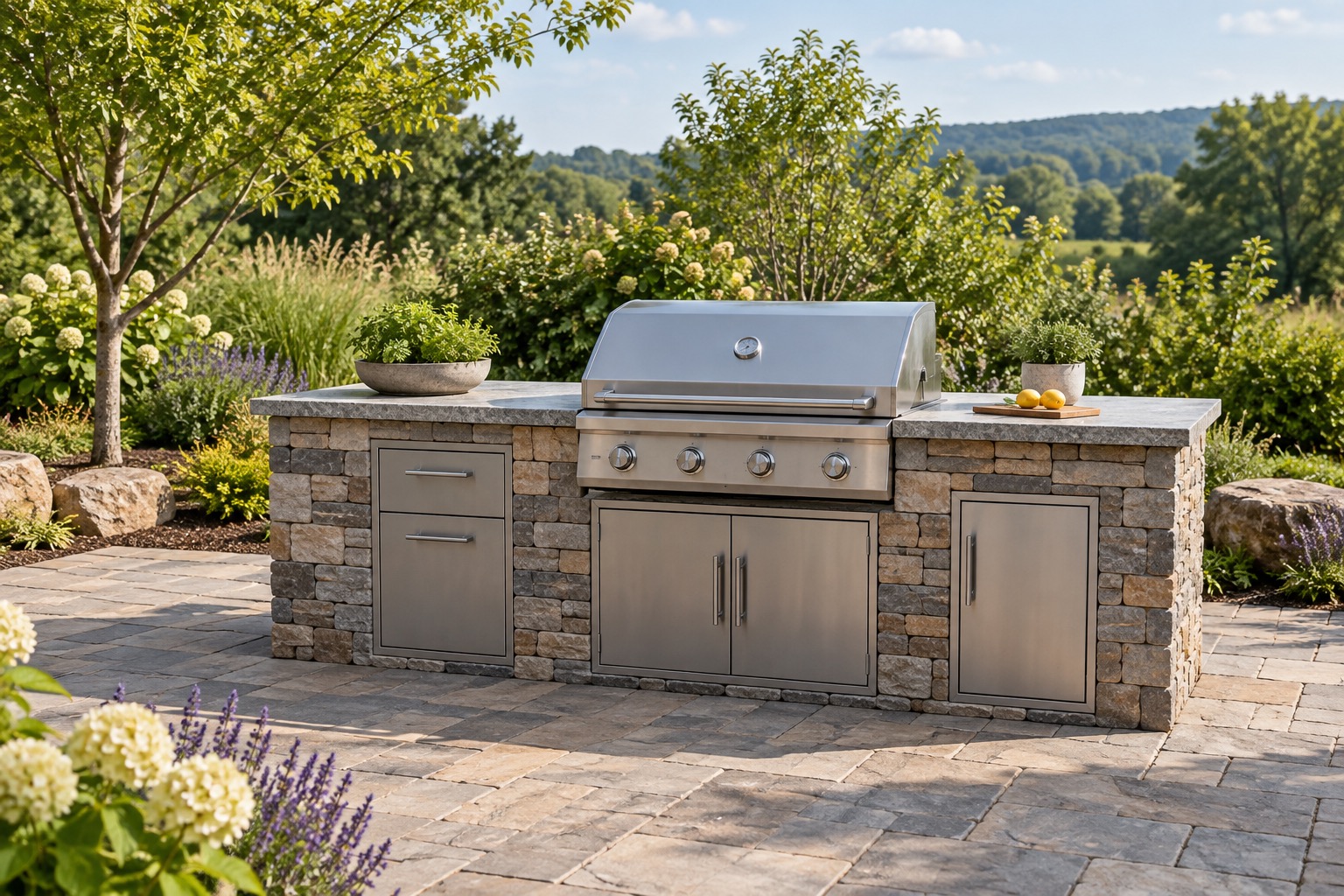
Choose a workable layout, suitable materials and service connections before committing to the island and appliances.
Our articles are a starting point, not a professional assessment of your home.
DraftA work in progress, prepared by the HouseIQ.pro team.Editorial and professional review are not yet complete.
The Big Picture
A durable outdoor kitchen is a small exterior construction project with appliances, drainage and utilities, not an indoor cabinet package moved outside.
Start with the meals you actually make
List what you want to do outside before drawing the island. Grilling a few weekends each month may need a safe appliance location and a preparation surface. Frequent entertaining might justify lighting, refrigeration or a sink. Each added service brings a construction cost and a maintenance obligation. A sink that seems convenient in July may need professional winterization every autumn.
Walk the route from the indoor kitchen carrying an imaginary tray. Note door swings, steps, seating and where people gather while someone cooks. Plan a clear working area rather than letting the grill become the centre of foot traffic. Keep an accessible path back indoors and avoid making a utility shutoff reachable only by moving a heavy appliance. These everyday observations produce a more useful brief than choosing finishes first.
The appliance determines its safe surroundings
A grill's instructions establish clearances, allowable enclosures and ventilation details for that model. A built-in appliance and a freestanding grill are not interchangeable merely because their widths match. Combustible walls, overhead structures, nearby vegetation and concealed materials beneath a stone facing all deserve review. A noncombustible-looking exterior does not prove the whole island is suitable.
West Milford's public safety guidance stresses outdoor use, sound equipment and following manufacturer instructions. Use the selected appliance manual alongside local requirements when locating it. Have a qualified designer resolve roofs, enclosed patios or unusually confined sites. Keep propane storage arrangements compliant and separate from prohibited indoor locations. If gas is smelled or a leak is suspected, stop use and follow emergency guidance; a finishing contractor should not improvise a gas repair.
Ask what each material is rated to withstand
Sun, rain, freeze-thaw cycles and coastal salt are different exposures. Ask about the actual cabinet, frame, fasteners, worktop and joint materials. A sales description such as weather-resistant is only a starting point. Obtain exterior-use approval, maintenance instructions and warranty exclusions for the specific product and location.
For example, Cosentino describes Dekton's low water absorption, UV resistance and temperature resistance. That is evidence about that product family, not permission to assume every stone-look slab performs the same way. Natural stone, concrete and other manufactured surfaces need their own assessment. Ask the fabricator about supports, edges, cutouts and movement joints. A durable slab can still fail at an unsupported overhang or poorly detailed opening. Keep fabrication work, particularly dust-producing cutting, with appropriately equipped professionals.
Rain needs a route through and around the project
An island sits in a wet environment even when it has a cover. Review where rain lands, where surfaces shed it and whether the base traps water. Cabinets should be designed for their exposure, with details that protect contents without trapping moisture against vulnerable components. Covers should be used as the appliance and cabinet makers direct, including cooling equipment before covering it.
Look at the surrounding patio after rain before the project begins. A low spot that already ponds will not improve because a masonry island is built over it. Ask who is responsible for the foundation, surface drainage and connections at the house. Photograph the proposed location in wet weather. This gives the contractor a concrete problem to solve and avoids relying on a dry-day showroom impression.
Electrical planning includes weather and simultaneous loads
Make a list of appliances that may operate together: refrigerator, lighting, grill accessories and countertop equipment. A licensed electrician can assess the supply and design required circuits, protection, outdoor-rated equipment and weather-resistant connection details. Ground-fault protection reduces shock risk; it does not make an ordinary indoor appliance suitable for rain.
ESFI's outdoor guidance distinguishes electrical protection from safe equipment use. An extension cord should not become the permanent utility plan for an island. Have routing, underground work and inspection requirements settled before paving or cabinetry hides the work. Ask for a labelled circuit schedule and photographs of buried routes. Keep receptacles and disconnects accessible, and clarify whether equipment must be disconnected or stored when temperatures fall outside its approved operating range.
Water, drainage and gas are separate design decisions
An outdoor sink needs a potable water supply and an approved wastewater destination. It is not automatically acceptable to discharge soapy sink water into a planting bed or storm drain. Discuss backflow protection, shutoffs, drainage and local approval with the plumber. The route back to existing plumbing may influence the sink's usefulness more than the price of the fixture.
A gas professional should check fuel type, appliance input, available capacity, pipe route and required isolation. Do not select gas piping by matching the diameter visible at a nearby barbecue. Include permits, utility locating and inspections in the written scope before excavation. If the budget is tight, compare a simpler cooking area without a sink or permanent gas extension. Fewer services can be a deliberate choice that leaves more money for a dependable surface and safe layout.
Design winterization before the first winter
Water trapped in exposed piping, valves or appliances can freeze. The Red Cross identifies outdoor and unheated piping as vulnerable and directs users to manufacturer instructions when draining outdoor systems. A cover is not freeze protection for a water-filled component. Insulation slows heat transfer but does not provide a continuous heat source by itself.
Ask the plumber for a written shutdown and reopening plan for the installed system. Identify which parts drain, which retain water and which require professional service. Follow appliance-specific instructions for filters, pumps, ice makers and refrigerators. Do not improvise compressed-air procedures or add antifreeze without explicit suitable instructions. Keep the winterization record with the home paperwork, and set the reminder by local freeze risk rather than a universal calendar date.
Compare complete bids and future access
A useful quotation identifies the appliances, approved installation details, frame and surface materials, service connections, drainage, permits and cleanup. Ask what happens if the chosen grill is discontinued: can it be removed and replaced without demolishing the island? The same question applies to a refrigerator and a concealed valve. Access panels are part of the design, not an afterthought.
Before final payment, obtain manuals, inspection records and a walk-through of shutoffs and maintenance. Check that doors open fully, water does not collect in obvious low spots and service access is usable. Record the first seasonal inspection date. A good handover leaves you knowing what can remain outdoors, what needs storage and whom to contact for each system. That information makes the space easier to own long after the first barbecue.
Questions worth asking
- Which appliance manual and local requirements govern this layout?
- What exactly must be winterized, and by whom?
- Can every appliance and service valve be reached for replacement?
Sources
- Township of West Milford Barbecue Safety
- Cosentino What is Dekton
- Electrical Safety Foundation International Outdoor Electrical Safety Check
- American Red Cross Preventing and Thawing Frozen Pipes