

Plumbing / Home care
Home plumbing: know the pipes, find the shutoff
Understand copper, PEX, PVC and older steel pipes, then make a practical plan for leaks and freezing weather.
Our articles are a starting point, not a professional assessment of your home.
DraftA work in progress, prepared by the HouseIQ.pro team.Editorial and professional review are not yet complete.
The Big Picture
Knowing how to stop the water is more useful in an emergency than knowing the brand of every pipe. Learn the system before a leak makes the lesson urgent.
Supply pipes and drains do different jobs
Think of plumbing as two road networks. Supply pipes deliver clean water under pressure to taps and appliances. Drain pipes carry used water away, usually by gravity, while vents help the drainage system operate. A pipe that is perfectly suitable for one network may be unsuitable for the other. Colour alone is not a specification.
Before buying a fitting, identify the pipe markings, dimensions, service and joining system. Potable-water certification addresses contact with drinking water; it does not by itself establish the correct pressure rating, hot-water rating or local approval. A drain fitting and a pressure fitting that look similar are not automatically interchangeable. Keep photographs of visible markings with your home records.
Copper and PEX are systems, not just materials
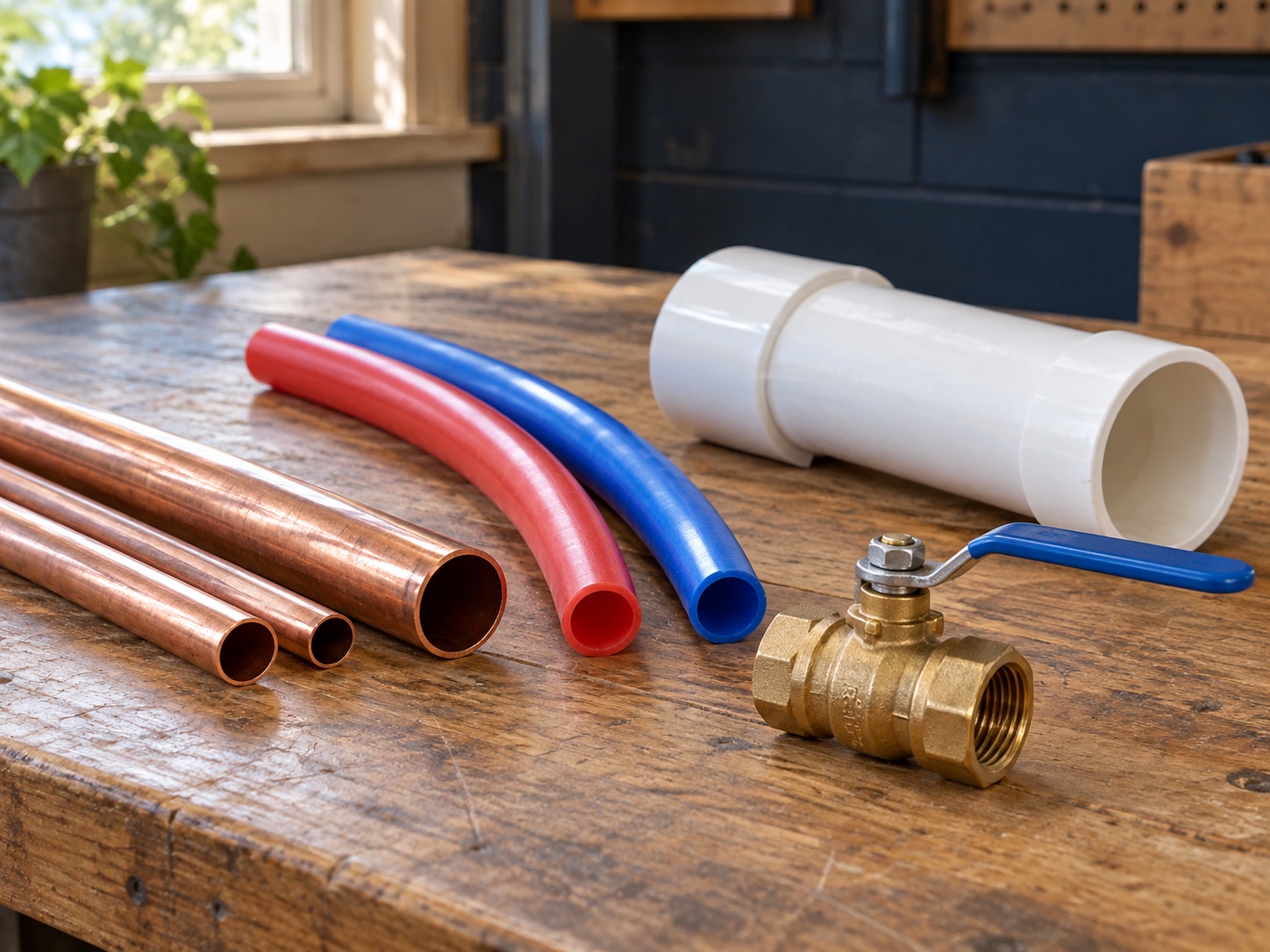
Copper tubing is rigid, familiar and compact. It can be durable, but water chemistry, workmanship and service conditions matter. PEX is crosslinked polyethylene: its flexibility can let a run turn gently and pass through a renovation with fewer intermediate joints. Those different installation paths can matter as much as the price of a metre of pipe.
PEX is not one universal fitting system. Tubing, fittings, rings, tools and connection methods must be compatible and approved. Sunlight exposure, support spacing, bend radius and proximity to heat have manufacturer limits. Copper also needs appropriate fittings and transitions. Ask the plumber to identify the complete proposed system rather than accept “we always use this.” Neither material earns a promise that it can never leak or freeze.
PVC and older galvanized steel need a closer look
PVC is widely seen in drainage, and particular pressure-rated products are also used for approved cold-water applications. That does not mean any white PVC pipe belongs on an indoor hot-water supply. CPVC is a different material with different temperature capabilities and joining requirements. Local rules and the product markings settle the application, not a visual resemblance.
Older galvanized steel supply piping can accumulate internal corrosion and deposits, reducing useful flow even when the outside looks solid. A weak shower may therefore involve the pipe network, a valve, the fixture or the supply pressure. One symptom does not diagnose a whole-house replacement. Ask for evidence showing which sections are affected, and include transitions and inaccessible sections when comparing repair scopes.
Find the main shutoff on a quiet day
Locate where the water supply enters and identify the valve intended for occupants to use. It may be near a basement meter, in a utility space or elsewhere according to local practice. Do not assume the first valve you see controls the whole property. Apartments, wells, fire-sprinkler supplies and shared services require a system-specific explanation from the owner or operator.
Have someone knowledgeable show you the valve and arrange a controlled test if its condition is uncertain. Do not force a seized or badly corroded valve; breaking it can create the emergency you were trying to prevent. Keep access clear, label the confirmed control and tell other household members where it is. Record the utility emergency number and who can authorize a shutoff in a shared building.
Fixture valves and leak clues make repairs easier
A working isolation valve at a toilet, sink or appliance can confine a repair to one branch. Familiarize yourself with these locations without dismantling fittings. Look for fresh moisture, mineral deposits, swollen cabinet bottoms and staining underneath connections. A clean dry paper towel held near an accessible suspected drip can help locate it, but never reach into a wet electrical area.
Photograph the symptom and note whether it appears continuously, only while a fixture runs or after an appliance cycle. Those distinctions help a plumber choose where to investigate. A water alarm can provide an earlier warning in an accessible risk area, but it cannot stop every leak. Automatic shutoff equipment needs proper installation, commissioning and a plan for shared supplies and critical services.
Insulation slows freezing; it does not make heat
Pipes near exterior walls, in unheated garages and in crawlspaces deserve attention before a cold snap. Think of pipe insulation as a coat: it slows heat loss but cannot keep water warm indefinitely in a freezing space. Correcting cold-air leakage and keeping vulnerable plumbing within a reliably heated area can address the underlying exposure.
Disconnect outdoor hoses and follow the installed faucet or irrigation system’s winterizing instructions. Maintain appropriate heat while away and arrange someone to check the property. Where local guidance recommends dripping a vulnerable tap during exceptional cold, confirm which tap and conditions apply; leaving every tap running is not a general maintenance strategy. Any heat cable must suit the pipe and be installed exactly as listed.
A frozen pipe can leak when it thaws
A sudden trickle during freezing weather suggests a possible frozen section. Know how you will stop the supply before attempting anything. Never use a torch, open flame or improvised high heat. If the section is inaccessible, there is visible damage, or you cannot safely determine the problem, call a plumber. Water may escape as an ice blockage releases.
If a pipe bursts, close the known occupant-operated shutoff only if you can reach it safely, then contact the plumber or utility as appropriate. Stay out of water that may contact electricity and have emergency responders or the utility make that area safe. Renters should promptly notify the landlord or building emergency contact; do not wait for a routine maintenance appointment while water is spreading.
Clear water is not a complete water-quality test
A visible copper pipe does not prove every hidden pipe, solder joint or service line is lead-free. Older components can contribute contaminants through corrosion. If the service material or water quality is uncertain, use the utility’s records and local public-health or certified-laboratory testing guidance. Appearance and taste are not reliable tests for lead.
Keep the issue separate from water softness or a taste preference. A filter selected for one purpose does not necessarily address another; verify the specific contaminant claim and replacement schedule. Use cold tap water for drinking and food preparation following local advice, and remember that boiling does not remove lead. Pipe replacement and treatment decisions should respond to identified conditions, not a generic fear of old houses.
Compare a complete repair plan
A useful quotation identifies the damaged or unsuitable piping, the replacement system, accessible shutoffs, required permits, wall-opening work and testing after completion. Ask who restores finishes and how long the home will be without water. For a partial replacement, ask which older sections remain and how the new and old systems will connect.
The practical homeowner job is observation, access and documentation. Altering supply lines, changing main valves and opening concealed assemblies belong with a qualified person who understands local requirements. After work, retain photographs before walls close, material details and the final inspection or test record. Those few records can save the next owner or tradesperson considerable guesswork.
Questions worth asking
- Where is the confirmed occupant-operated main shutoff, and has it been checked for reliable operation?
- Which proposed products are approved for drinking water, hot water and the local installation?
- Which pipes remain after the repair, and what testing and finish restoration are included?
Sources
- NSF NSF/ANSI 61: Drinking Water System Components – Health Effects
- Plastics Pipe Institute PEX Plumbing Design and Installation Guide: Installation (Chapter 9)
- American Red Cross Preventing and Thawing Frozen Pipes
- City of Toronto Pipe Leak or Burst
- US EPA Basic Information about Lead in Drinking Water
- HUD / National Institute of Building Sciences Residential Rehabilitation Inspection Guide: Plumbing