

Plumbing / Drainage
Sewer lines: clogs, roots and what a camera can tell you
Recognize a developing backup, protect the drain system and ask better questions before approving a sewer repair.
Our articles are a starting point, not a professional assessment of your home.
DraftA work in progress, prepared by the HouseIQ.pro team.Editorial and professional review are not yet complete.
The Big Picture
Clearing a blockage restores flow. Finding out why it formed is what helps prevent the next backup. A camera inspection can inform that decision, but its limitations belong in the report.
One slow sink and a whole-house backup are different clues
A slow basin may have a local obstruction. Several fixtures backing up together, or water appearing at a low drain while another fixture runs, suggests a problem farther along the shared route. Think of traffic: a queue at one driveway differs from a jam on the road that all the driveways use. The pattern helps direct an investigation; it is not a diagnosis by itself.
Note which fixtures are involved, when the problem began and whether neighbours are affected. A backup during heavy rain may involve a public sewer, a private defect or another flood pathway. Do not assume every wet basement means a blocked sanitary pipe. Give the plumber and municipality the sequence of events rather than just the final puddle.
During a backup, stop adding water
Stop using toilets, sinks, showers and water-draining appliances while a suspected main backup is assessed. Keeping the washing machine running can feed more water into a system with nowhere to send it. Keep children and pets away from sewage and isolate the area without entering unsafe water. Do not lift a cleanout cap to see what happens; backed-up contents may escape.
If water may contact electrical equipment, stay out and get emergency or utility assistance. Photograph damage only from a safe location, contact the building emergency representative if renting, and report the event to the local sewer operator as directed. Sewage cleanup is not ordinary mopping: contamination, porous materials and concealed wet areas require appropriate assessment and restoration.
A drain is a transport system, not a disposal shortcut
Grease that leaves a pan as a liquid can cool and accumulate farther along the pipe. Wipes, floss and other durable items can catch on rough surfaces or existing obstructions. A product labelled flushable is not assurance that your utility wants it in the sewer. Toilet waste and toilet paper are the sensible default; follow local wastewater guidance for anything else.
Let cooking fats cool into an appropriate container and use your local waste collection route. Wipe greasy cookware before washing and catch food scraps with a strainer. These habits are inexpensive because they prevent material entering the system at all. Running hot water or adding detergent does not turn an unsuitable disposal habit into a maintenance plan.
Roots and pipe damage can make clogs recur
A recurring obstruction can involve roots, a damaged joint, a displaced section or a deteriorated pipe. Removing the material caught there may leave the defect behind. Picture clearing leaves from a gutter with a broken outlet: the immediate problem improves, but the reason it keeps happening still matters. A tree near the route is a clue to discuss, not proof that the tree caused the failure.
Ask the contractor to distinguish what they actually observed from what they suspect. “Roots at the joint at this measured position” is more useful than “old pipe, replace everything.” Equally, a short clear section does not establish that the entire line is sound. Keep the original footage and written findings so a second opinion can consider the same evidence.
Find the access point before the emergency
A cleanout is an intended access opening for inspection and cleaning equipment. Its location and condition affect how readily a professional can investigate. It may be indoors, outdoors or concealed by later finishes; some properties lack useful access. Identify it with a plumber and keep it reachable rather than cover it permanently with shelving, flooring or landscaping.
Knowing where it is does not mean opening it is a casual DIY task. Caps can be seized or damaged, and backed-up lines can release contaminated water. Ask whether access improvements would make future maintenance less disruptive. Record the cleanout location alongside any available sewer service drawing, making clear which details were verified and which came from an old plan.
A useful camera inspection has a written story
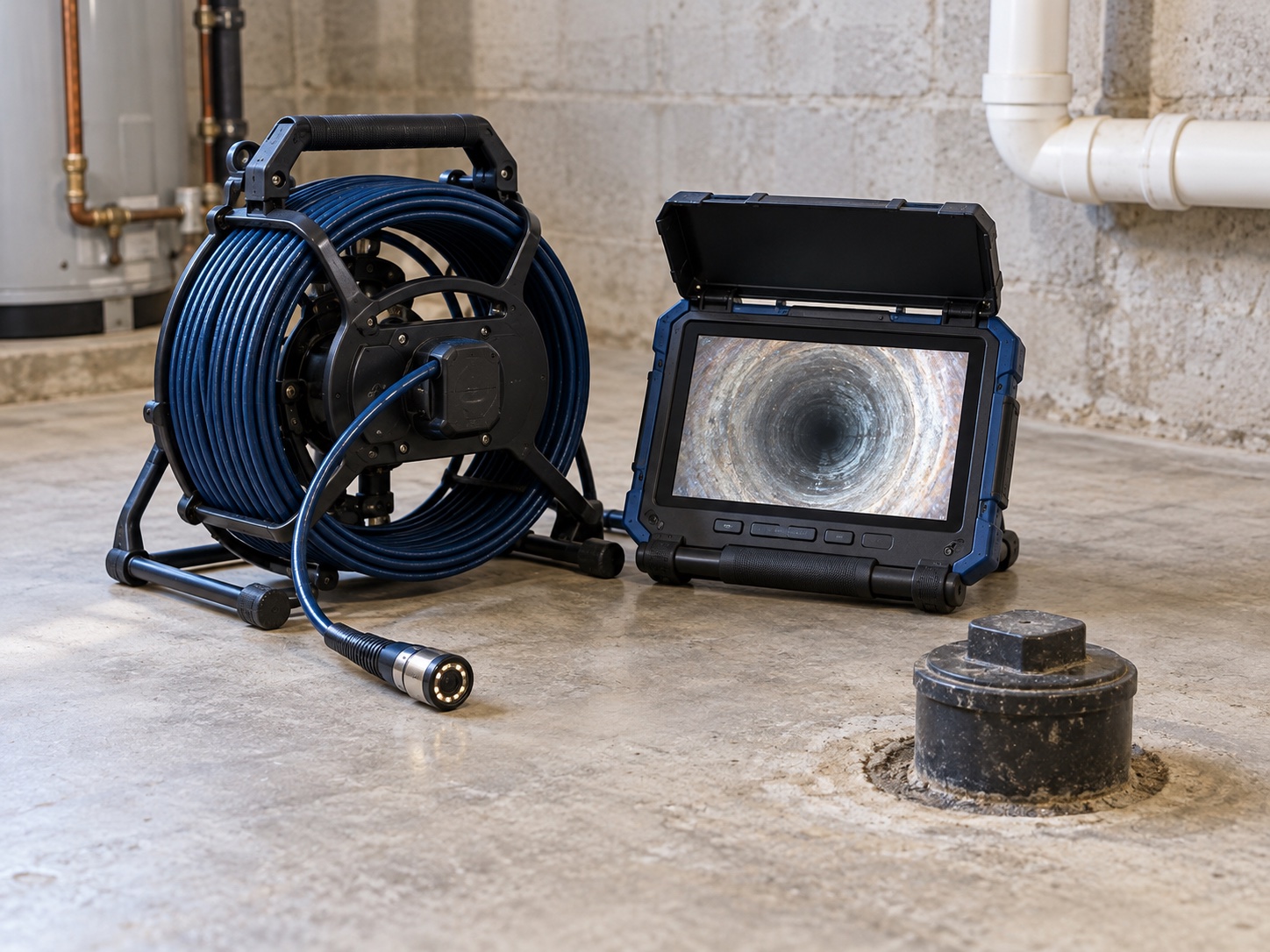
A sewer camera gives a view of the pipe interior along the route it can reach. Ask for footage, the entry point, direction of travel, distances, materials seen and any locations the technician could not pass. A locating device may help relate an observed defect to a place above ground. The result should let you understand where a proposed repair would happen.
Dirty water, debris, bends and obstructions can limit the view. A camera does not see every condition outside the pipe and does not, by itself, certify every joint as watertight. If the recommendation is substantial, ask whether cleaning followed by a second look would clarify the decision. For a property purchase, obtain the report while there is time to investigate the findings and obtain realistic quotations.
Cleaning, lining and replacement solve different problems
Professional cleaning can restore flow where removable buildup is the issue. A repair may address a localized defect. Lining or replacement involves different access, preparation and suitability questions; no method is automatically right because it avoids a trench or comes with a long warranty. Ask how the proposal addresses the observed problem and what condition must exist for that method to work.
Compare the included work: access excavation, permits, utility locating, restoration, connections and verification after completion. Ask what happens if preparation reveals a collapsed or otherwise unsuitable section. Do not operate rented power snakes or pour chemicals into a recurring main-line blockage as a substitute for assessment. Tell the contractor about any chemical cleaner already used so they can plan safely.
The property line is not a universal rule
Toronto provides one example: its guidance describes the City-owned portion from the street sewer to the property line and the owner’s portion into the home. Other municipalities and utilities assign responsibility differently, including portions beneath a public road. Shared drains, condominium arrangements and easements can add another layer. Confirm the rule for the actual address before agreeing who will pay.
Ask the utility who investigates first, which permits or approvals are needed and whether a known public blockage is affecting the property. Renters should notify the owner or manager promptly; responsibility for arranging work and any recovery of costs depends on local law and circumstances. Insurance coverage is another separate question. Preserve records and ask the insurer rather than assume a sewer backup or buried-pipe repair is covered.
Build a maintenance plan around evidence
A home with a known recurring root problem may need a different inspection schedule from one with a recently verified sound line. Ask the professional to recommend an interval and explain why. Keep dates of blockages, cleaning, inspections and repairs; a pattern of increasingly frequent service is useful evidence that the strategy needs review.
On a septic property, the pipe is only part of the system: tank servicing, water use and the condition of the soil treatment area matter too. Avoid routing roof or drainage water into wastewater piping unless the local system specifically permits it. The goal is straightforward: keep inappropriate material out, preserve access, and investigate repeated symptoms before the next backup becomes an indoor cleanup.
Questions worth asking
- Where does responsibility change for this particular sewer service, and are any sections shared?
- What did the camera actually reach, and what remains uninspected?
- Does the quotation clear an obstruction, repair its cause, or both—and how will the result be verified?
Sources
- City of Toronto Blocked or Backed-Up Basement Drain
- City of Toronto What Not to Flush or Pour Down the Drain
- US EPA How to Care for Your Septic System
- US EPA Potential Hazards in a Flooded Home