

Structure / Safety
Termites and carpenter ants: spot the clues, find the cause
Wood damage, mud tubes and stray wings mean different things. Identification comes before treatment—and moisture control belongs in the plan.
Our articles are a starting point, not a professional assessment of your home.
DraftA work in progress, prepared by the HouseIQ.pro team.Editorial and professional review are not yet complete.
The Big Picture
Treat the right pest, repair the conditions that helped it, and assess damaged structure separately from the insect treatment.
A clue is a reason to investigate
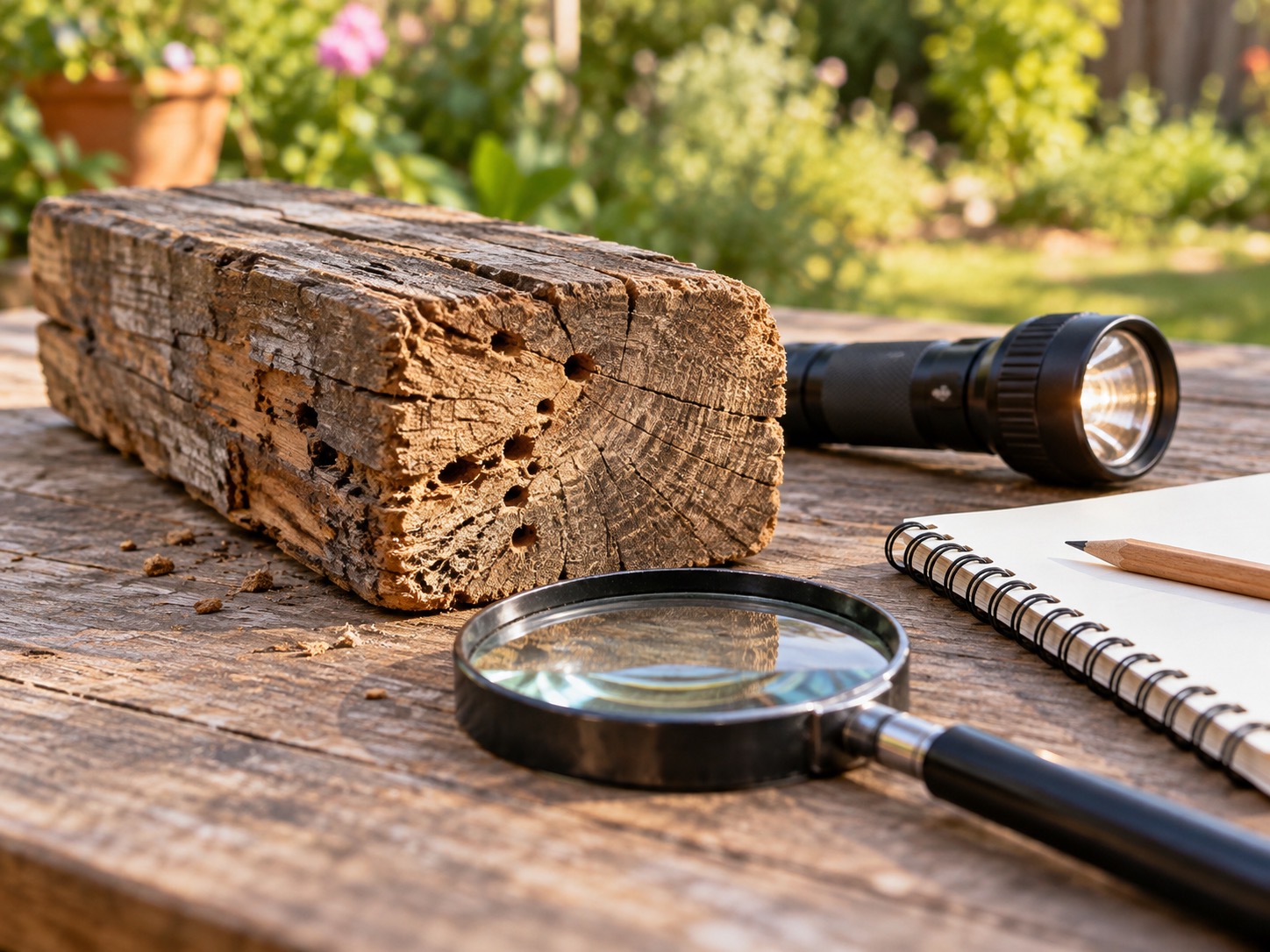
A few insects near a window do not tell you how much of a house is affected. Nor does the absence of visible insects prove that hidden timber is sound. Start by recording where the evidence appeared, the date, whether the area was wet and whether the observation repeats. A clear close photograph or safely collected specimen can help an expert.
Avoid disturbing suspected nests or covering evidence with paint before assessment. Do not pull apart a supporting member to see how bad it is. Pest identification and structural evaluation answer different questions: what is living here, and what can this damaged part still safely support? Both may be necessary.
Subterranean termites travel from protected places
Subterranean termites are associated with soil and often build shelter tubes that let them move between the ground and food while avoiding exposure. Tubes on foundation surfaces are a useful warning sign, although hidden routes can exist. Termites consume cellulose-containing material, including structural wood.
The broad lesson is to avoid giving them concealed access and persistent moisture. Keep foundation areas observable and have unexplained tubes identified rather than assuming they are harmless dirt. Removing one visible tube does not remove the colony or prove that activity has stopped. A trained inspector considers the building and its surroundings, not just the patch you can see from the garden.
Drywood termites do not need a soil connection
Drywood termites can establish within wood without the soil contact associated with subterranean species. Small hard faecal pellets accumulating below tiny openings are a possible clue, but debris alone is not a reliable diagnosis. Their distribution is regional, and affected timber or furnishings can move between places.
That biology changes the investigation and treatment. A soil-treatment proposal should not automatically be assumed to address an infestation entirely within dry wood. UC IPM describes localized and whole-structure approaches with different strengths and limitations. Ask how the inspector identified the species, how the extent was assessed and why the proposed method fits the evidence. A tidy surface does not reveal all hidden galleries.
Carpenter ants excavate rather than eat wood
Carpenter ants remove wood to make nesting galleries; they do not use it as food in the same way termites do. Their activity can be associated with damp or decayed wood, although satellite nests can occur in drier locations. That is why spraying the few ants crossing a kitchen floor may miss the actual nest.
Ants generally have a narrow waist and bent antennae; winged ants have unequal front and rear wing lengths, while winged termites have more nearly equal wings and straighter antennae. These are helpful distinctions, not a substitute for expert identification. University of Minnesota Extension stresses that seeing carpenter ants does not always establish an indoor nest and that control can be complex.
Read the building clues alongside the insect clues
Look from accessible, safe positions for new piles of debris, discarded wings, stains, failed sealant and recurring dampness. Note whether a door has started binding or a floor feels newly uneven during ordinary use, but do not deliberately load or bounce a suspect structure to test it. These changes can have causes other than pests.
A pest contractor may identify activity while a qualified building professional assesses repairs. Ask for photographs and locations in the report so recommendations can be connected to actual evidence. If a deck, stair or other support appears unstable, stop using it and restrict access until it is evaluated. Killing insects does not restore timber that is already missing.
Make inspection and drying easier
A useful prevention visit can be quite ordinary: check leaking taps and downspouts, move stored wood away from the building, and make sure plant growth does not conceal the foundation. Maintain drainage and repair water entry. Keep timber debris from accumulating in damp spaces and retain any inspection access required by the local building or pest-management system.
Do not block vents, drainage openings or an established termite-inspection gap while trying to seal an entry. Ask before adding foam, cladding or garden soil where it would hide a vulnerable junction. The objective is a building that can dry and be observed. Cosmetic concealment can make a future inspection harder even when the room looks improved.
Baits, barriers and local treatment are different tools
Termite baits are part of a monitored control system; some use slow-acting active ingredients that affect the colony. Soil-applied treatments aim to protect particular routes, while certain infestations call for wood treatment or professionally managed whole-structure methods. These are not interchangeable products to choose by the size of the container.
Ask what must be inspected or replenished, what conditions would compromise the treatment and how success will be assessed. Excavation, landscaping and later building work may affect an existing protection system. Keep the plan and service records. A warranty may cover retreatment, damage repair, both or neither in particular circumstances; read its scope instead of treating the word warranty as complete insurance.
Keep pesticide work specific and accountable
Use only products and methods approved for the pest, building and location, with application by appropriately licensed or qualified professionals where required. Requirements differ across countries and local jurisdictions. Do not pour outdoor pesticide into wall voids or improvise a chemical mixture because insects are visible there.
Ask for the product name, registration details, label, preparation requirements and re-entry instructions. Tell the contractor about children, pets, wells and other relevant site conditions. Fumigation and other restricted treatments require specialist controls; they are not a homeowner procedure. Treatment should be explained in writing, including follow-up and what to do if activity returns.
Choose a diagnosis before choosing a contract
Obtain a written description of the pest, evidence, affected areas, proposed work and limitations. Ask whether the inspector is reporting active activity, old damage or uncertainty. Where the scope is large or the evidence unclear, an independent second assessment can help you compare explanations rather than simply prices.
Renters should promptly send dated photographs to the landlord or property manager and request a response. Responsibility for inspection, treatment and access follows local law and the tenancy agreement, not a universal rule. Avoid arranging destructive treatment without permission. Owners should keep inspection and treatment records with the home documents so later contractors know what protection exists and what must not be disturbed.
Questions worth asking
- Which pest has been identified, and from what evidence?
- Is there active infestation, old damage or an unresolved question?
- Who will assess any structural damage?
- What monitoring, exclusions and re-entry conditions are in the treatment agreement?
Sources
- US EPA Termites: how to identify and control them
- University of California IPM Drywood termites
- University of Minnesota Extension Carpenter ants
- US EPA Tips for selecting a pest control service