

Electrical
Whole-home surge protection: what Types 1, 2 and 3 actually mean
See why a plug-in strip is only one layer, how permanent SPDs fit the electrical system, and where protection has limits.
Our articles are a starting point, not a professional assessment of your home.
DraftA work in progress, prepared by the HouseIQ.pro team.Editorial and professional review are not yet complete.
The Big Picture
Surge protection works as a coordinated system, with correct installation and visible maintenance—not a lightning-proof promise.
A surge is a brief voltage event
A surge protective device, or SPD, limits brief overvoltage events that can damage electronics. Utility switching, nearby lightning and switching loads within a building can all contribute. The vulnerable equipment includes control boards inside appliances and heating equipment, not just a computer plugged into an office strip.
Imagine a sharp pressure pulse in a water pipe. The issue is the brief disturbance rather than the normal quantity flowing every day. That analogy helps distinguish surge protection from the breaker that responds to excessive current. It also explains why a home with apparently adequate electrical capacity can still benefit from a surge-protection review. Ask about the equipment you depend on, including hardwired appliances that never connect to a plug-in protector.
Type numbers describe an application
In the North American UL framework, Type 1 devices are intended for specified permanent connections at the service, including appropriate locations ahead of the main overcurrent device, and may also be used downstream where allowed. Type 2 devices are intended for the load side of that main protection. Type 3 devices provide point-of-use protection, such as an appropriately listed plug-in unit.
The number is not a simple good-better-best score. The device's listing, electrical system, installation location and manufacturer's instructions must agree. Other standards use related terminology with different test conventions, so do not transplant an overseas comparison table without checking its framework. Have the electrician identify the proposed type and explain why it fits your service. The homeowner's task is understanding the design, not choosing a connection point.
Why a strip cannot protect the entire house
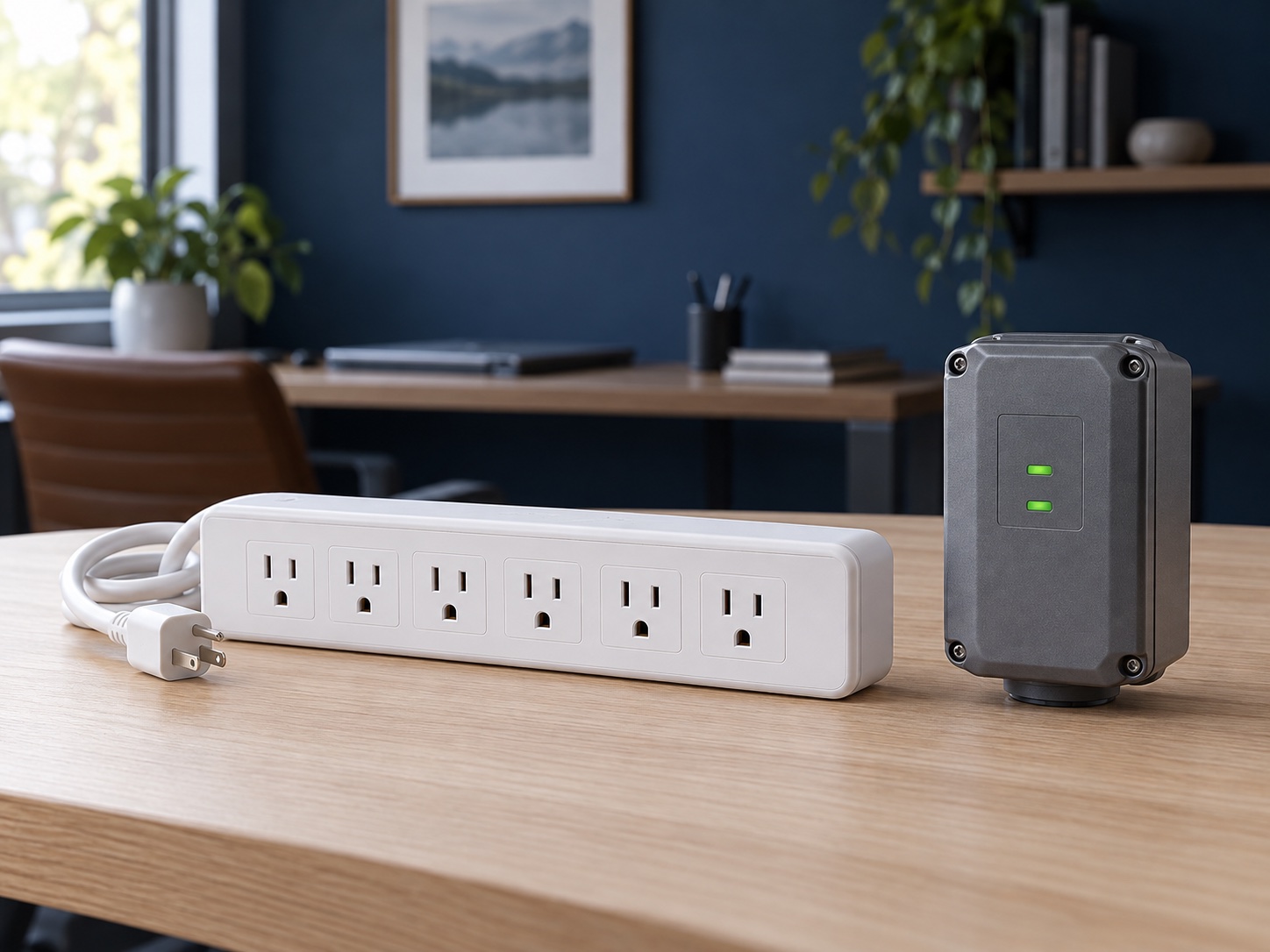
A plug-in surge protector serves connected equipment. It does not place a protective device at every hardwired load or every incoming path. An ordinary power strip may provide extra outlets without surge protection at all. Read the product identification rather than treating an illuminated switch as proof.
A service or panel SPD can provide broader protection, while suitable point-of-use devices add another layer for sensitive equipment. Think of the arrangement as protection at the building entrance and again near selected equipment. Neither layer is an excuse to ignore the other. During a room-by-room inventory, note televisions, office equipment, networking, heat pumps and appliance controls. This turns “whole-home protection” from an advertising phrase into a list of assets and connection paths to discuss.
Installation quality is part of performance
A protective device is not independent of the wiring around it. The routing and length of connections, grounding and bonding, the equipment's enclosure and the selected protection modes affect the installed result. Eaton's application material specifically discusses connection length and the importance of appropriate installation.
Ask a licensed electrician to assess the existing service and panel and provide an installed proposal. Do not remove panel covers to look for a spare connection, and do not assume that turning off the main makes every part of the service safe. A useful quote identifies the device, location, approvals, permit responsibility and any correction needed before installation. Request photographs of the completed external installation and its readable status indicators for your home record. Those are more useful later than an unlabelled invoice saying “surge unit.”
Read the ratings together
A high advertised surge-current number is not a complete performance comparison. Relevant specifications include the system voltage, voltage protection rating, nominal discharge-current rating, short-circuit rating and the modes of protection. They answer different questions about limiting voltage, endurance, fault conditions and the conductor combinations being protected.
Ask the electrician to compare two proposed models using the same test framework and the same application. Avoid choosing solely by joules, cabinet size or a dramatic equipment-replacement warranty. A large warranty can contain conditions and exclusions, and it does not demonstrate that the installation suits your house. Keep the model's actual data sheet. When a quote includes only a brand and a large number, request the missing specification before deciding whether the higher-priced option adds something useful.
Lightning protection has limits
An SPD can reduce damage from transient overvoltage, including some lightning-related surges. It cannot promise that every device will survive a direct strike or that the building is protected from every lightning hazard. A comprehensive lightning-protection system is a separate design involving more than a panel accessory.
This distinction matters when a salesperson says “lightning proof.” Ask what is being claimed, what remains outside the scope, and whether the site's exposure warrants a specialist assessment. A rural property, a detached workshop and an elaborate communications installation may need a different conversation from an apartment. Keep people out of the comparison with appliances: protecting equipment does not replace storm-safety practices. No homeowner should experiment with a device, cord or panel during an electrical storm to see whether the protection is working.
Remember communications and other power problems
Equipment can connect to more than the electrical supply. Coaxial cable, telephone wiring, data connections and links to outbuildings deserve consideration in a coordinated design. Protection appropriate for one kind of circuit is not automatically appropriate for another; the electrician or relevant specialist should identify the interfaces.
Surge protection also does not supply energy during a blackout. A UPS or designed backup system addresses continuity, while prolonged abnormal voltage and wiring faults need their own diagnosis. If lights suddenly become unusually bright or dim, equipment repeatedly behaves abnormally, or there is a burning smell, seek prompt electrical or utility assistance rather than buying a larger SPD. Keep the symptoms, time and affected rooms in your notes. A clear history helps separate a transient event from an ongoing supply problem.
Indicators need an owner who notices them
Many SPDs have indicator lights or other status information. The meanings differ: a light can indicate power, protection status or a fault. A unit may require replacement after damage or after its protective components reach the end of their useful life. Read the exact manual rather than interpreting every green light in the same way.
At handover, ask for a demonstration of normal status and the action to take when it changes. Put that check on the same household reminder as other visible equipment checks, and review it after a significant electrical event. If the device is in an infrequently visited room, ask whether a remote alarm is appropriate. Do not open the enclosure or bypass a warning. Save installation dates and replacement records so a future owner knows what is present.
Make the proposal specific to your house
Ask for a plain-language protection plan: which incoming services are addressed, which hardwired loads benefit, where point-of-use protection remains advisable, and what maintenance is expected. Check local code requirements with the responsible installer or authority; adoption dates and renovation triggers vary by jurisdiction. A statement about a particular edition of the US National Electrical Code is not a universal rule for every Canadian or existing home.
Compare the complete installed scope, including corrective work and permits. Keep surge protection separate from the related discussions of panel capacity and AFCI/GFCI safety. Those devices solve different problems and can coexist. The useful purchase is a compatible, correctly installed and observable system—not a promise that electricity can no longer damage anything you own.
Questions worth asking
- Which type and exact model fit our service and local requirements?
- Which hardwired loads and incoming communications paths are addressed?
- How do the installed ratings and connection arrangement compare between proposals?
- What do the indicators mean, and when does this model require service or replacement?
Sources
- Electrical Safety Foundation International Surge Protective Devices
- Eaton Surge protection FAQ
- Eaton Bussmann series UL and data signal surge protective device application guide 3193
- Eaton Guide to Surge Suppression