

Windows
Replacing windows: full-frame or insert?
The old frame and its water-management details decide whether a neat insert is enough or the opening needs a fuller repair.
Our articles are a starting point, not a professional assessment of your home.
DraftA work in progress, prepared by the HouseIQ.pro team.Editorial and professional review are not yet complete.
The Big Picture
Choose the replacement method after assessing the existing opening—not simply from the price of the glass.
Start with what is staying
A window quotation can sound complete while leaving the most important question unanswered: which parts of the existing opening remain? Ask the installer to point out the sash, outer frame, interior trim and surrounding wall. Then ask what will be removed, what will be inspected and what will be reused. A simple marked-up photograph is often clearer than sales terminology.
Tell the installer why you want the change. A difficult latch, failed glass seal, draught, water stain and desire for a larger view are different starting points. Replacement glass or hardware may address a limited defect; a damaged frame or water path calls for a broader assessment. Do not order a whole-house package before understanding the recurring problem.
An insert uses a sound existing frame
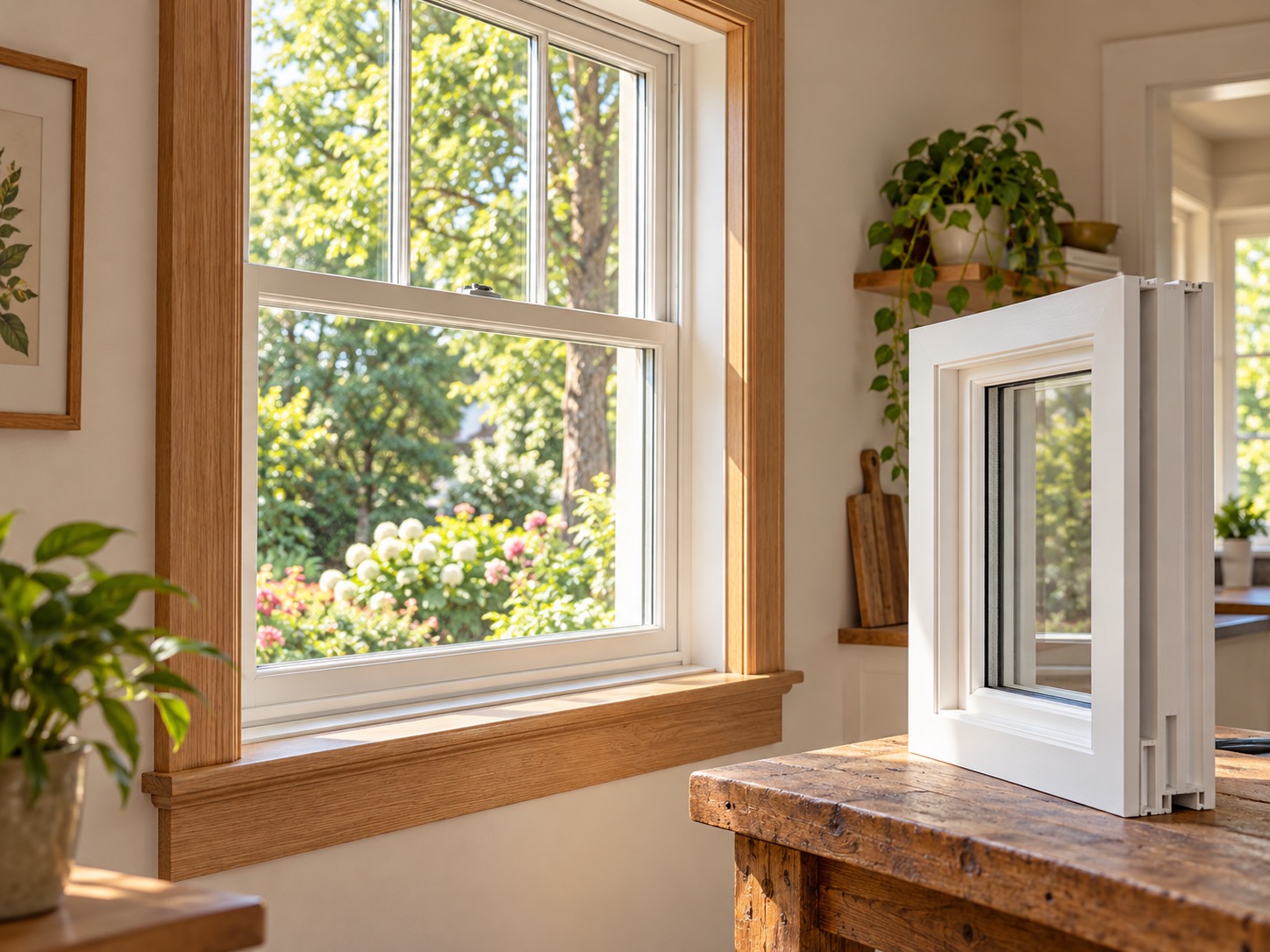
An insert, sometimes called a pocket replacement, fits a new window unit into the retained frame after the old operating parts are removed. It can preserve surrounding finishes and reduce disruption where the existing frame is sound, reasonably true and suitable for the particular product. It also relies on parts of the existing installation continuing to do their job.
The new frame sits within the old opening, so visible glass area can shrink. Ask for the actual finished glass dimensions and sightlines rather than comparing nominal sizes. Try a sample where possible. A deep or bulky profile may matter more at a small kitchen window than it does at a large living-room opening.
Full-frame work exposes more of the problem
Full-frame replacement removes the old frame as well as the operating window. It provides more opportunity to inspect the opening, repair damage and reconnect water and air control layers. Flanged and flangeless products have different installation approaches; full-frame does not automatically mean every bit of exterior siding must be replaced. The wall and product dictate the detail.
Ask what access is needed inside and outside. A proposal should account for trim, sill finishes, paint, blinds and any damaged sheathing or framing. Where the opening changes size, structural and approval questions become part of the work. New glass cannot compensate for an unresolved leak around the opening.
Investigate stains before covering them
Photograph water staining, peeling paint and recurring dampness before the appointment. Record whether it follows rain, wind direction or cold-weather condensation. These observations help distinguish possible water entry from moisture forming on a cold surface, but they do not identify every concealed condition. Avoid destructive probing yourself, especially where older paint or other hazardous materials may be present.
Ask how the installer will assess the retained frame and what findings would rule out an insert. If suspicious conditions cannot be explained from the visible surfaces, agree on an investigation before committing to a method. Also agree how unforeseen damage will be priced and authorized once the opening is exposed.
Water needs a route back outside
Flashing is the collection of details that intercepts water and directs it safely out of the opening. Its connection to the wall's drainage plane matters. PNNL's Building America guidance stresses integrating sill, side and head flashing with surrounding water-control layers. A neat exterior bead of sealant is not proof of that hidden continuity.
Ask the installer to explain the water route in your actual wall: where incidental water is collected, where it exits, and how the upper layers overlap the lower ones. Brick veneer, stucco and framed siding have different access constraints. Request photographs before the opening is covered. Leave designed drainage paths and product weep openings clear.
Air sealing and glass performance are separate
The new window's thermal performance and the seal around its frame both influence comfort. An excellent glazing package in a poorly connected opening can still disappoint. Ask which product ratings are being quoted and how the interior air seal will meet the existing wall system. The materials must suit the window, gap and manufacturer's instructions.
Avoid assuming that every cold sensation is air leakage. A cold glass surface can create discomfort even when it is closed tightly. Conversely, replacing glass alone may leave an air path at the frame. Explain where and when you feel the problem, then ask the assessor to distinguish the likely causes before promising a result.
Check operation, safety and older materials
Before signing, confirm the opening style, clear opening, handle reach, screen arrangement and cleaning access. In sleeping rooms, changes may affect emergency escape requirements; safety-glazing, wind resistance and other requirements depend on location and use. An attractive frame is not enough if the installed unit fails a required function. Ask who verifies these conditions and obtains approvals.
Older painted surfaces may contain lead. EPA's US guidance identifies pre-1978 homes as a key lead-paint concern and describes safer renovation controls; other countries have their own history and rules. Plan assessment and appropriate containment before disturbing finishes. Heritage designations and condominium responsibilities may also limit what can change.
Compare the whole scope
Ask each bidder to price the same windows and the same finishing scope. Separate the product from removal, disposal, access equipment, opening repairs, flashing, air sealing, trim, painting and approvals. An insert often involves less disturbance, but that is only a good saving when the retained work is fit to remain. There is no reliable universal price difference for every house.
Clarify who moves furniture and coverings, how the home will be protected from weather during the work, and what happens if a delivery is delayed. Request a named contact for leaks or operating problems afterward. A clear installation responsibility can be more useful than a long product warranty with gaps around labour.
Review the finished window while the crew is there
Open, close and lock each window with the installer. Check that you understand any tilt, vent or cleaning functions, and identify the drainage openings you should keep clear. Review repaired finishes and ask for the completion photographs and product labels before packaging disappears. Keep the window schedule, installation method and warranty information with the home record.
Watch the opening during subsequent weather and report new staining or operation changes promptly. Avoid covering a symptom with paint before documenting it. A well-chosen replacement method should leave you with a functioning window and a clear explanation of how the opening manages water, air and everyday use.
Questions worth asking
- Which frame and finishes stay, and why are they suitable?
- How much glass and clear opening will remain?
- How will flashing connect to the existing drainage plane?
- What repairs, approvals and finishing work are included?
Sources
- Andersen Windows New construction vs. replacement windows
- Pacific Northwest National Laboratory Pre-Retrofit Assessment of Walls, Windows, and Doors
- Pacific Northwest National Laboratory Windows and Doors are Fully Flashed
- US Environmental Protection Agency Lead-Safe Renovations for DIYers