

Energy IQ / Comfort IQ / Build IQ
Windows: frames, glass and energy performance
Read the frame, glass and performance ratings together to understand winter heat loss, summer solar gain and everyday comfort.
Our articles are a starting point, not a professional assessment of your home.
DraftA work in progress, prepared by the HouseIQ.pro team.Editorial and professional review are not yet complete.
Start with the room you want to improve
A window purchase often begins with a feature: triple glazing, a particular frame, or an attractive sliding design. It is easier to make sense of those features after naming the problem. Is the reading chair uncomfortable in January? Does the west-facing bedroom overheat in July? Are you comparing replacement quotes, or trying to understand an existing window?
Keep those questions beside the specifications. A useful comparison connects the opening style, frame, glass package and performance label with what happens in that particular room. A long feature list alone cannot make that connection.
Window style describes how it opens
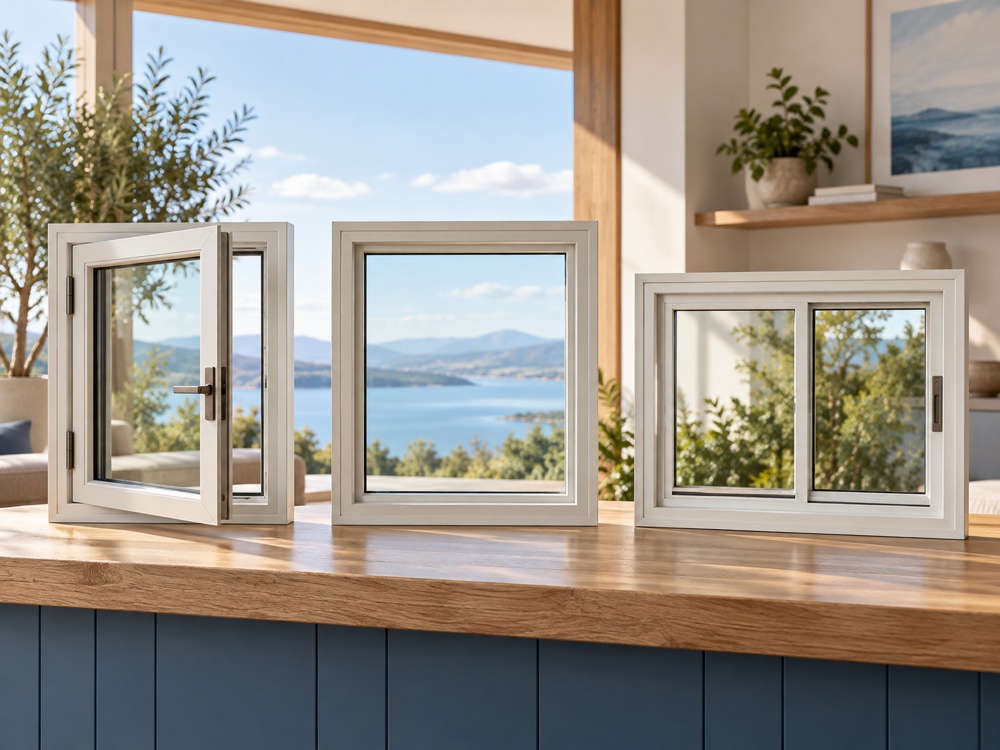
A fixed window stays closed. A casement pivots at a side hinge; an awning pivots at the top. Horizontal sliders move sideways. A single-hung window has a movable lower sash and a fixed upper sash; a double-hung lets both sashes move. The sash is the part that holds the glazing and, in an operable window, moves within the frame.
These names describe operation, not an efficiency grade. Consider reach, ease of opening, screens and the space needed for a swinging sash, then compare the actual product ratings. A fixed and an opening window in the same product family need not have identical performance.
If a quote says “sashless slider,” ask the supplier to identify the exact assembly and show its construction and ratings. That label alone does not establish the pane count, insulation or airtightness. It should start a conversation about the product, rather than stand in for its specifications.
Sources: [3]
The frame is part of the thermal package
Common choices include wood, vinyl, fiberglass, aluminum and combinations of materials. Wood can offer good thermal performance but needs protection and maintenance. Vinyl offers moisture resistance and generally avoids the painting needs of exposed wood. Composite and hybrid frames combine materials; a wood interior with an aluminum exterior, for example, is a different construction from an all-aluminum frame.
Aluminum conducts heat readily. A thermal break places an insulating separation in the frame's heat-flow path. Ask whether one is present rather than judging an aluminum product by appearance. With fiberglass or any other material, compare the complete rated window and the manufacturer's maintenance instructions. No material name guarantees the best result.
For a fair quote comparison, also record the frame dimensions and resulting glass area. Two windows that fill the same opening may give you a different view.
What double glazing, triple glazing and low-e contribute
Double glazing has two panes separated by a sealed space; triple glazing has three. The spaces help resist heat transfer, and inert gas fills such as argon or krypton can improve that resistance. Spacers hold the panes apart, so their thermal properties matter at the glass edge as well.
Low-emissivity, or low-e, coatings reduce radiative heat transfer. Different coatings admit different amounts of solar heat: low-e does not automatically mean low solar gain. Ask for the U-factor and SHGC of the offered glass package, rather than accepting “low-e” as its full description.
Triple glazing can improve cold-weather performance and help keep the interior glass surface warmer, reducing condensation risk. It is not a promise of dry glass under every indoor humidity and outdoor temperature. Compare the complete double- and triple-glazed products: pane count is one ingredient in the result.
Read four ratings separately
U-factor describes heat transfer through the assembly: lower means better resistance to heat flowing from the warmer side to the colder side. Ask for a whole-window value, including frame and glass edges. A centre-of-glass figure leaves those parts out and can make a product look better than the complete window actually is.
Solar heat gain coefficient, or SHGC, is a fraction from zero to one. Lower values admit less solar heat. Visible transmittance, or VT, describes visible light: higher values admit more. These are different properties, so compare both when you want daylight without as much solar heating.
Air leakage describes air passing through a window under test conditions. Lower is better for limiting that flow. It is separate from U-factor: insulation performance does not tell you whether air is moving through a joint. Ask for the leakage result if it is absent from the label.
Canadian and U.S. numbers need matching units
Canadian material commonly expresses U-factor in W/(m²·K); U.S. labels commonly use Btu/(h·ft²·°F). Multiply the U.S. value by 5.678 to obtain the metric value. For example, 0.20 in U.S. units is approximately 1.14 in metric units. Those are equivalent values, not competing levels of performance. SHGC and VT are dimensionless and need no such conversion.
You may also see Canada's Energy Rating, or ER. NRCan describes it as balancing U-factor, solar gain and air leakage; higher indicates better performance under that rating method. It is not another name for U-factor. Keep the underlying ratings visible when comparing products, especially when summer overheating is part of your concern.
Cold Canada and sunny Florida ask different questions
In a Canadian room beside a large window through a long heating season, reducing U-factor deserves close attention. Yet winter performance is only part of the brief: ask what happens in summer and whether the room already overheats. Useful winter sunshine and unwanted summer heat can arrive through the same opening.
For a sunny Florida room during the cooling season, a lower SHGC can be especially valuable for limiting solar heat gain. That does not make U-factor irrelevant. Nor does it make one glass package ideal for every elevation: orientation, exterior shading, surrounding buildings and landscaping change the exposure.
Give the supplier a room-by-room description. A shaded opening and one exposed to strong afternoon sun may warrant different discussions even on the same house. Ask how the proposed combination handles heating, cooling and daylight across the year.
A small comparison makes the trade-off visible
Imagine two hypothetical quotes with comparable whole-window ratings, shown below. Product B has better insulating performance and admits less solar heat; A admits more visible light. These invented values illustrate the labels, not recommended specifications.
The next question is which combination suits your room. Ask for an explanation tied to its sun exposure and comfort problem. A percentage difference between two U-factors is not the same percentage reduction in your household energy bill; the rest of the house and its operation still matter.
| Rating | Product A | Product B |
|---|---|---|
| U-factor, W/(m²·K) | 1.4 | 1.0 |
| Solar heat gain coefficient | 0.45 | 0.25 |
| Visible transmittance | 0.60 | 0.45 |
Bring the label back to the building
The rated product still needs suitable installation. Ask a qualified installer how the chosen window will connect with the existing wall and how water management and air sealing will be addressed. Obtain a clear scope and retain the product identification and performance information with the quote.
If your starting point is a draught, describe where and when you feel it. Air descending beside cold glass can feel like leakage even when it is room air circulating. Let an assessment distinguish that from air entering through joints. That distinction helps you discuss the cause before committing to replacement.
HouseIQ comparison prompt: put each quote on one page with the exact model, opening style, glass package, whole-window U-factor and units, SHGC, VT, leakage information, installed scope and warranty. Mark anything missing as a question. The most useful proposal is one you can understand well enough to compare.
Questions worth taking with you
- Are these whole-window ratings for the exact model and glass package offered, and do the U-factor units match?
- What explains the proposed SHGC and visible transmittance for this room's orientation and shading?
- What additional performance does the triple-glazed option provide compared with the quoted double-glazed assembly?
- Is the comfort concern linked to heat transfer, actual air leakage, solar gain, or more than one of these?
- What installation work, product identification and warranty information will the written quote include?
Sources
- Natural Resources Canada Keeping the Heat In — Section 8: Upgrading windows and exterior doors
- Natural Resources Canada Ratings and certification
- National Fenestration Rating Council Window Types
- National Fenestration Rating Council Window Frames: Not just a place holder!
- National Fenestration Rating Council Window Ratings
- National Fenestration Rating Council Frequently Asked Questions
- National Fenestration Rating Council Choosing Windows