

Homeowner to-do list
Use these steps to turn the article’s guidance into a practical plan.
Tick items as you go. Checkmarks are not saved to your account.
Follow the heat through the system
In cooling mode, indoor air passes over a cold coil. Refrigerant absorbs heat there and carries it through the circuit to the outdoor side, where that heat is released. A compressor and other components maintain the conditions that make the transfer possible. The system uses electricity to move heat; the indoor fan alone does not create cooling.
Central systems distribute air through ducts. Ductless systems use indoor units serving particular spaces. In either arrangement, the equipment needs suitable airflow and a properly installed refrigerant circuit.
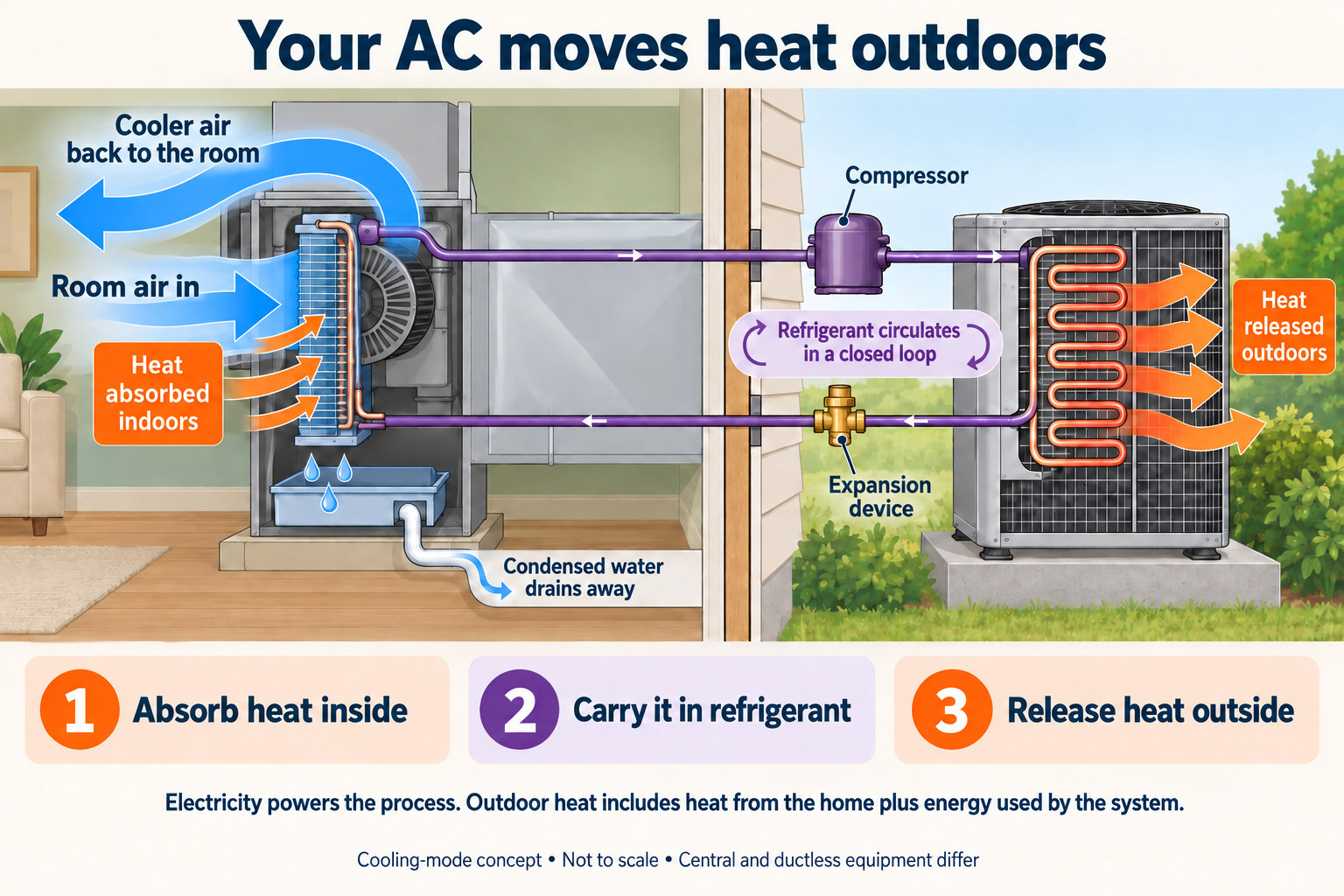
Separate blue arrows show room air entering the indoor coil and cooler air curving back left toward the couch. Both airflow paths remain indoors. Purple lines show the closed refrigerant circuit: indoor coil, compressor, outdoor coil, expansion device and back to the indoor coil. Orange arrows show heat absorbed indoors and released outdoors. The indoor and outdoor air streams remain separate. Water can condense on the cold indoor coil and leave through a separate drain. Electricity powers the process, so outdoor heat includes both heat from the home and energy used by the system. Component locations and connections are schematic, not an installation or servicing specification.
The water is part of the process
When the indoor coil is cold enough, water vapour from the air condenses on it and drains away. That is how cooling can also remove moisture. The drain arrangement matters: water appearing where it should not is a service clue, not something to ignore because the room still feels cool.
A temperature-controlled system may satisfy the thermostat while humidity remains uncomfortable. Ask about moisture loads and equipment operation rather than simply choosing a lower temperature. Persistent humidity can need a broader investigation and sometimes dedicated dehumidification.
Bigger does not automatically mean more comfortable
Equipment should match the home’s calculated cooling demand and moisture load. Oversized equipment can reach the temperature setting quickly and cycle off before providing the intended humidity control. Variable-capacity equipment changes the conversation, but it still needs appropriate sizing and setup.
A replacement quote should account for windows, shading, insulation, air leakage and room layout. Floor area alone is not enough. Tell the contractor about planned envelope improvements before equipment is selected.
Air delivery connects the machine to the rooms
A good central unit cannot compensate for every duct defect. Leaks, restrictions and poor return paths can affect comfort and performance. Keep accessible supply and return grilles clear and report rooms that remain different from the rest of the home.
A technician can check airflow, duct condition and refrigerant charge as part of commissioning or diagnosis. Refrigerant is not a homeowner top-up task. Opening equipment or changing charge without training risks injury and can conceal the real problem.
What you can look after
Follow the manual for accessible filter inspection, replacement or cleaning, using the correct size and specification. Ask the service person to demonstrate it if the access is unfamiliar. Observe the outdoor unit from a safe position and keep the manufacturer’s required clear space around it; do not remove guards or reach into it.
Record unusual sounds, ice, water leakage and when performance changes. Have those symptoms assessed instead of repeatedly resetting the system or treating an error message as a repair instruction.
Reduce the load as well as serving it
Window shading and suitable envelope improvements can reduce unwanted heat gain. Their usefulness depends on orientation, climate and the existing house. In a humid climate, bringing outdoor air inside can also add moisture, even when that air feels cooler.
The useful goal is a comfortable room with controlled moisture, supported by equipment that is sized, installed and maintained for the house. Ask for the commissioning record and a clear explanation of the normal controls when the work is complete.